
BYD flash charging coming to UK as boss calls for government action on costs
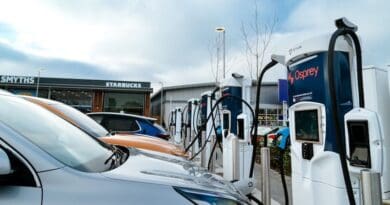
BYD plans to bring its 1000kW flash charging to the UK this year as it continues its Europe-wide expansion.
The Chinese giant’s UK country director, Bono Ge, confirmed that it aimed to install 300 of its ultra-rapid chargers around the country before the end of the year to support the launch of its new Denza premium brand.
He said he hoped the network would help reduce charging costs for EV drivers but also suggested that government action was needed to make public charging more affordable.
BYD first demonstrated its flash charging technology in China in early 2025, before confirming a European roll-out in June. The ultra-rapid system works with BYD’s Super-E platform and 10C battery to deliver up to one megawatt of power. That’s enough to add 1.2 miles of range per second, or 250 miles in just five minutes.
Most ultra-rapid chargers currently offer peak power of 350kW and only a handful of cars are capable of making full use of that.
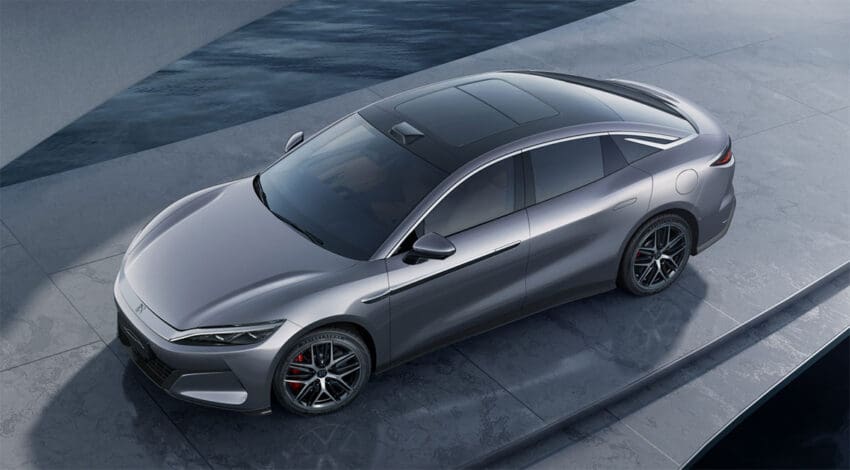
Initially only EVs from Denza will be able to take full advantage of the megawatt charging thanks to their next-gen platform. The launch of the network will coincide with that brand’s arrival in the UK later this year with the high-performance Z9GT.


Open to all
Although only Denza models will be able to charge at up to 1,000kW, Ge said that the chargers would be open to all EV owners. He noted: “Not every car can achieve one megawatt. That’s really regarding your battery pack on the car, but the charger is universal. Everyone can use the charger.”
He added that BYD and Denza owners were likely to be offered discounted charging rates, in the same way as Tesla owners get cut-price charging on the Supercharger network.
Ge told journalists that BYD was in discussion with a variety of partners to decide on the best means and locations to roll the chargers.
He said: “At the moment we are thinking about three different roads. First, we would like to work with some CPOs [chargepoint operators]; secondly, we’ll be working with the dealers. And thirdly, we have some partners we are already in discussion with, for example, the chain supermarkets as well as some rental companies. They are electrifying their fleet, so they normally have really good locations near airports, near train stations, which are also suitable to set up the chargers there.”
‘There must be room to cut costs’
Ge said he hoped the flash charging network could help cut charging costs through the use of technology, expected to include energy storage solutions, noting: “One of the reasons for the flash charging network is to get the charging price reasonable, not more expensive. That’s not what we want.”
He said BYD was working on “technical solutions” that might help cut costs but also said he believed government action was needed to make public charging costs more manageable.
Describing the UK’s charging landscape as “unique” in Europe, he said: “You can benefit from 7p/kWh [tariffs] if you charge from home. But if you go to the motorway, you need to pay 79p to 89p/kWh. So we believe there must be some room to try to reduce the cost because one big barrier for the UK customer is the charging cost.
“The purchase costs are actually quite reasonable. But if you only rely on public chargers, not a lot of people can afford to use electric cars.”


He said that current high prices were inhibiting use of the public network, making it harder for CPOs to invest in infrastructure or lower their prices. Calling for the government to step in, he argued that lower prices would improve utilisation rates which would in turn help the network develop and aid the ambition to help more drivers go electric.
His calls echo those of other industry leaders, who have backed demands to reduce VAT and standing charges on the public network. In recent weeks reports have suggested the Treasury is examining lower VAT on public charging from its current 20% to 5% to bring it in line with domestic rates.