
This is every new electric car coming in 2026
An exhaustive (or near-exhaustive) list of every new EV scheduled to go on sale in the UK in 2026
2025 was a bumper year for EVs and, even with yet more political flip-flopping, 2026 is set to be even bigger.
The next 12 months will bring another massive influx of new electric cars to the UK. We’ll see established EV experts expand their EV line-ups, famous names embrace electrification, plus plenty of new brands arriving for the first time.
We’ll also see everything from tiny two-seat city cars to massive mile-munching grand tourers and high-performance supercars providing an electric option for every requirement and budget.
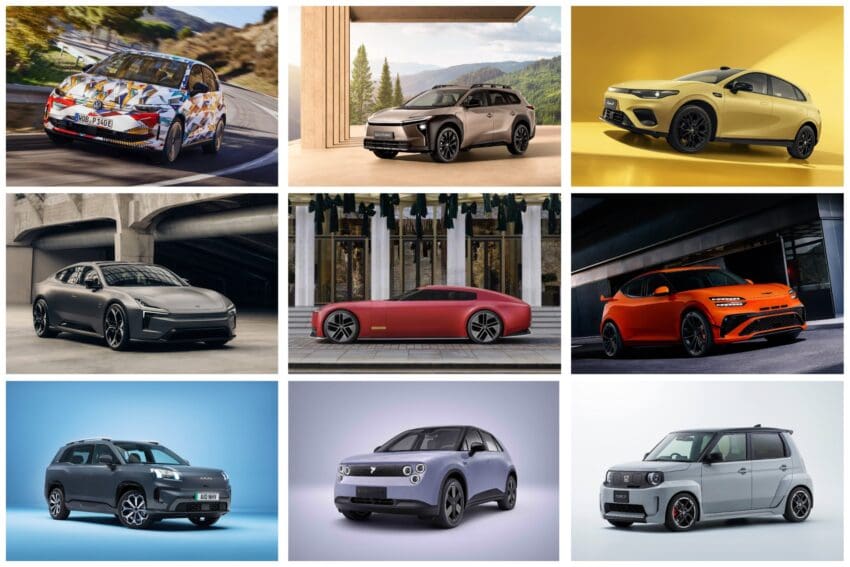
The EV Powered team has picked out the cars we’re most excited about here, but below we’ve rounded up every new EV coming to the UK in 2026. As ever, such lists are at the mercy of shifting production plans and random last-minute announcements, so we might see some models vanish from the slate and others appear over the coming year.
Aion


Aion is yet another new Chinese brand looking to make an impact in the UK’s growing EV scene. It’s already operating in a handful of European markets and is gearing up for an early 2026 entry to the UK. It will start with the Aion V, another C-segment SUV priced from the mid-£30,000s and offering around 320 miles of range. Expect it to compete with the Geely EX5, Leapmotor C10 and MGS6 in the sub-Model Y category.
Shortly after the Aion V, the Aion UT will arrive. This five-door hatch is expected to challenge the Volkswagen ID.3, MG4 and Renault Megane, and will offer up to 268 miles of range. There’s no indication of pricing but expect MG-like levels of competitiveness.
Alfa Romeo
There’s nothing set in stone, but the industry rumour mill suggests that we’re due a couple of new Alfa EVs in the next 12 months. The Giulia and Stelvio have both been around for a very long time and are ripe for renewal as EVs. Their excellent Giorgio platform can’t support electric power, so expect both to be based on the STLA Large underpinnings used on the Jeep Wagoneer S and Dodge Charger. That could mean up to 400 miles of range and Quadrifoglio versions with more than 600bhp.
Alpine
Renault’s sporty spin-off has already embraced electrification with the rather nice A290 and next year will see two more pure EVs from the French performance specialist.
First is the A390, an all-new rival to the Porsche Macan. Equipped with a two-motor arrangement, This five-door coupe-SUV will produce up to 464bhp and sprint from 0-62mph in 3.9 seconds. It will also feature trick torque vectoring and carefully tuned suspension and steering for a traditionally Alpine driving experience.
Later in 2026, we also expect to see the first glimpse of the all-new, all-electric Alpine A110. Built on a bespoke platform, this will apparently stay true to the previous A110’s focus on lightness and driver engagement. In mid-2025 Alpine boss Philippe Krief told journalists the new model would use a two-motor rear-wheel-drive setup to produce up to 500bhp. That suggests it may use the underpinnings from the radical Renault 5 Turbo 3E.
Bentley
Bentley is keeping most of the details of its first EV under wraps (literally) for now but we do know it will be with us by the end of 2026 and will be the smallest Bentley yet, at less than five metres long. The “luxury urban SUV” is based on the same PPE platform as the Porsche Cayenne, which is likely to mean up to 400 miles of range, ultra-rapid charging and potentially up to 1,000bhp, all wrapped in Bentley’s traditional luxury sheen.
BMW


The start of 2026 will see the arrival of the BMW iX3, the first in the Neue Klasse family of next-gen EVs. A direct replacement for the brand’s premium family SUV, the new iX3 promises a 500-mile range, 400kW charging, 463bhp and a cutting-edge cabin, with prices starting at £58,755.
After the iX3 we’ll see the new BMW i3. No relation to the groundbreaking hatchback of the early 2010s, this new model is the all-electric 3 Series. Smaller and more efficient than the current i4, the i3 will use the same platform and powertrains as the iX3 but drape them in a sharp new saloon body inspired by the Vision Neue Klasse concept.
Cadillac
With one or two notable exceptions, US brands don’t do well in the UK, but Cadillac is hoping to change that with two new EVs.
First off is the Lyriq SUV. Priced from around £68,000 in Europe, it will arrive in the UK in the first half of 2026. Pitched as a high-end rival to the likes of Audi, Polestar, Porsche and BMW, the regular Lyric offers up to 528bhp, 329 miles of range and 190kW charging. There’s also a 615bhp Lyriq-V if you’ve got a spare £100k.
Alongside that, Cadillac is expected to bring the smaller Optiq. Like the Lyriq, it’s going for the premium market, with plenty of tech, high-end materials and a powertrain promising 304bhp and 264 miles of range. Starting prices in Europe are around £62,000.
Cupra


Cupra has just one new EV confirmed for 2026 but it’s a vital one. The Raval is not just Cupra’s first foray into the supermini segment, it’s also the vanguard for a family of four new, smaller and more affordable EVs from the VW Group. There’s more on all of those later on, but the Raval is set to be the spiciest of the bunch. Reflecting Cupra’s sporty stance, it comes with up to 223bhp, bespoke steering and suspension and an aggressive design.
We’ve already driven one and early signs are promising that the Raval could give hot hatches like the Alpine A290 a run for their money.
Dacia
The Dacia Spring has been around for more than a year now but 2026 is set to bring some major upgrades for the UK’s cheapest EV. Entry level cars now have 65bhp rather than 45bhp and range-toppers get 99bhp for improved performance. A new LFP battery increases range to 140 miles and charging speeds to 40kW, while anti-rolls bars and retuned suspension aim to improve handling.
Denza
Denza is the performance/premium wing of BYD and is scheduled to arrive in the UK in the latter half of 2026 with four quite varied models.
The B5 4×4 and D9 MPV are both scheduled to bring plug-in hybrid power to the 4×4 and MPV segments, rivalling the likes of the Toyota Land Cruiser and Lexus LM respectively.
Next to them, we’re set to see the Z9GT. With sights firmly set on the Porsche Taycan, this is an all-electric shooting brake packing a 952bhp three-motor powertrain and a 0-62mph time of 3.6 seconds. Denza is also expected to bring its Denza Z halo car. There’s no technical details but we would expect this two-seat supercar to use the same powertrain as the Z9GT when it makes its debut at the Goodwood Festival of Speed in the summer.
Ferrari
You can hear the outrage from here, but like it or not, Maranello’s finest is going electric. Due in late 2026, the less-than-creatively-named Elettrica is Ferrari’s first ever EV and promises more than 1,000bhp, 300 miles of range and an authentic Ferrari driving experience thanks to some clever chassis innovations. There are no images yet, but we do know it’ll be a four-door, four-seat model, perhaps in the vein of the Purosangue. We also know it won’t be cheap.
Fiat
We first got a look at the production version of the Fiat Grande Panda back in 2024 and it’s been on sale in Europe for a while but this new supermini will finally arrive in the UK in early 2026. It’s a spiritual and visual successor to the iconic Panda of the 1980s, and is based on the Stellantis Smart Car platform. That means a 111bhp motor and a 44kWh battery good for 199 miles wrapped in a funky retro design. Prices will start from under £21,000, rising to just over £24,000.
Genesis

After leaning heavily into the luxury angle, this Hyundai spin-off is now turning its attention to performance models, starting with the GV60 Magma. Based on the regular GV60 SUV, this borrows the clever powertrain tech from the Hyundai Ioniq 5 N. That means 641bhp, synthetic gear shifts, wooshy “engine” noises and a drift mode.
GWM
GWM has had a quiet 2025, with just its Ora 03 (previously the Funky Cat) on offer. 2026 will see that joined by a mid-sized crossover and a larger saloon. The Ora Cat crossover looks set to challenge the Kia EV5, VW ID.4 and Peugeot E-3008, although technical details are still scarce.
Later in 2026 we’re expecting to see the Ora 07 – a mid-sized saloon with up to 400bhp and 350 miles of range that seems primed to challenge the Tesla Model 3.
Honda
2026 is the year that we’ll finally see production versions of Honda’s striking new 0 Series EVs.
Using the same underpinnings, Honda will offer saloon and SUV options built around the principles of weight saving, aerodynamic design and smart tech. Honda says both should offer up to 300 miles of range and single- and two-motor versions are expected when the US-built cars arrive in the UK in late 2026.
Before the 0 Series cars, however, Honda will launch the Super-N EV. This boxy kei car-sized EV packs a 63bhp motor and 29.3kWh battery and is designed for city living. We’re hoping this Renault Twingo and VW ID.1 rival will start at around £17,000 when it goes on sale.
Hyundai
Two new cars are coming from the South Korean EV specialist next year, at very different ends of the spectrum.
First will come the Ioniq 6 N – a performance version of the saloon that takes all the clever bits of the 5 N and packages them in a slippery ‘streamliner’ body. Expect 641bhp, a 0-62mph time of just 3.2 seconds and tweaked suspension and powertrain settings for an even more engaging experience.
After that we’ll see the Ioniq 3 – an ID.3-sized hatchback based on the funky Concept 3. Expect similar specs to the related Kia EV4, including a 201bhp motor and 81.4kWh battery for more than 350 miles of range. We might also see a twin-motor N variant.
Isuzu D-Max EV
2026 might finally be the year that electric pick-ups get their act together. After complaints about the limited payload and towing capacity of other electric pick-ups, Isuzu has given priority to practicality. So the D-Max EV, due in early 2026, can tow 3.5 tonnes and carry up to one tonne in its load bed. It’s also got permanent four-wheel-drive, 188bhp and up to 163 miles of range, plus a starting price of £60k.
Jaguar

Jaguar stopped selling cars entirely in 2025 – a bold move. But it’ll be back in 2026 with an all-new all-electric grand tourer. We’ve had vague clues about its appearance in the Type 00 concept but expect a slightly toned-down take on its radical looks when the production car breaks cover. Tech specs are slender but it’s set to come with 600bhp or so, all-wheel-drive and the ability to add 200 miles of range in 15 minutes. It will also come with a six-figure price tag as Jag tries to fully immerse itself in the luxury car segment.
Jeep
Jeep – famous for rugged 4x4s and big petrol engines – has not one, nor two but three new EVs heading this way next year.
Likely to arrive first is the Compass – a Ford Explorer-sized family SUV with a faintly rugged air. Based on the same platform as the Vauxhall Grandland, it will offer up to 400 miles of range and 216bhp from a single-motor version, with AWD also on the cards.
Next is the Wagoneer S. Delayed from 2025, this EV equivalent to the Grand Cherokee promises more than 590bhp and a 300-mile range as it challenges the Audi Q6 e-tron and BMW iX.
Finally, in late 2026 the UK will get the Jeep Recon, an electric alternative to the Wrangler that promises genuine off-road ability, up to 641bhp and around 300 miles of range. Plus, you’ll be able to remove the doors and roof, just like the Wrangler.
KGM
Like Jeep, KGM is famous for combustion-powered 4x4s and pick-ups. But in 2026 it will release the Musso EV, an electric pick-up based on its existing Torres EVX SUV. SUV underpinnings mean it can’t match the D-Max’s payload and towing ability, but also mean a pleasant cabin and driving experience, and enough ability for lifestyle and less demanding business users. A bigger battery than the Isuzu or Toyota Hilux means around 230 miles of range.
Kia
Kia’s march towards EV dominance continues in 2026 with a brace of new cars.
The EV2 will sit beneath the EV3 as the brand’s new cheaper entry-point EV and challenge cars like the Renault 4 and BYD Atto 2. Expect a little less power and range than the EV3 and a price in the mid-£20,000s.
The EV4 is already on sale in regular everyday format but in 2026 we’ll get the performance EV4 GT. A second motor will boost power to somewhere north of 300bhp and we’ll get some chassis tweaks to make the most of that extra power. On sale in mid-2026, it will challenge the likes of the Cupra Born VZ and VW ID.3 GTX.
Before either of those, the EV5 will arrive. An electric partner to the Sportage, this will take on the Skoda Enyaq and its ilk in the family SUV market, with 214bhp, 329 miles of range and a starting price of just under £40,000. Expect all-round competence.
And somewhere along the line, we’re expecting a few other surprises as well.
Leapmotor


China’s Leapmotor made waves with two high-value propositions in 2025 and looks set to carry that on into 2026.
The B10 is a smaller SUV companion to the existing C10, going up against the Skoda Elroq and Kia EV3. With up to 270 miles of range, it’ll come in a single fully-loaded trim level and cost from £30,000 when it arrives in the first weeks of the new year.
After the B10, we’ll see the B05, a family hatchback rival to the VW ID.3 and Kia EV4. Expect the same technical underpinnings as the B10 and another big-value proposition when it arrives in the second half of the year.
LEVC
People carriers appear to be making a comeback and the LEVC 380 is the latest iteration of that. Based on the same platform as the Volvo EM90, this is a big, high-end MPV inspired by luxury air travel. There’s lots of fancy interior touches and up to eight seats. Expect to see it on hotel transfer fleets before the end of the year.
Lexus
The inbound Lexus ES is the ninth-generation of Japan’s answer to the BMW 5 Series and Audi A6 and, for the first time, is being offered as a pure EV. Arriving in the spring, it brings a completely overhauled and high-tech interior and a choice of two- or all-wheel-drive powertrains. Power ranges from 221bhp and 338bhp and range will be between 250 and 300 miles.
Mercedes-Benz


Mercedes’ march to electrification continues in 2026 with all-new versions of the GLB and GLC.
The completely new GLC will challenge the BMW iX3 and Audi Q6 e-tron with its 482bbp all-wheel-drive powertrain and 406-mile range. Priced from around £60,000, first deliveries are due in mid-2026.
The second-gen GLB is also all-new, bigger than before and based on the same 800V architecture as the new CLA. Offering seven seats as standard, there will be two- and four-wheel-drive versions with up to 392 miles of range, plus the option of the 38-inch “Superscreen”.
Also expected at some point in 2026 is the production version of the Mercedes-AMG GT XX. With three motors, 1,341bhp and a 0-62mph time of under 3 seconds, this four-door, grand tourer brings new meaning to the phrase super-saloon.
MG
After a busy end to 2025, MG has more to come in 2026. We know that at some point we’ll see the Cyberster GTS – a hard-top coupe version of the radical Cyberster roadster. We’ll also see the arrival of two new mainstream models. A smaller EV will arrive in February and slot in beneath MG4, possibly as an SUV rival to the Ford Puma Gen-E. After that another all-new car will arrive to sit between the current MG4 and MGS5 SUV.
Nissan
We’ve already driven the Nissan Leaf, but customer deliveries of this UK-built crossover will begin in early 2026. The third-gen Leaf shares a platform with the Renault Scenic and brings up to 386 miles of range from a 75kWh battery, plus a starting price of just £32,000.
Later in the year we’ll see the first all-electric Juke, also built in Sunderland and expected to borrow its mechanicals from the Renault 4 and draw design cues from the radical Hyper Punk concept. Finally, we expect Nissan’s twin to the Renault Twingo city car, probably named Pixo, to bring a sub-£20k price and 160-mile range.
Nio

A newcomer brand to the UK, Nio looks on course to have a four-car line-up by the end of 2026. There’s no sign, however, of its patented battery swap system reaching the UK yet.
The Firefly is a neat-looking compact hatch likely to compete with the Renault 5 and Citroen E-C3. A 200-mile range and 141bhp motor will be sufficient for city use and expect a competitive price when it goes on sale.
After that three larger models will arrive. The ET5 will be gunning for the Tesla Model 3 in saloon and estate forms, with supercar acceleration and close to 400 miles of range. The EL6 is expected to challenge the Model Y and premium SUVs from Mercedes and BMW, while the ES8, is a full-sized seven-seat SUV likely to rival the Volvo EX90 and Hyundai Ioniq 9.
Omoda
Omoda is hoping to attract a younger crowd with its fourth UK model when it arrives in the third quarter of 2026. The Omoda 4’s “Cyber Mecha” design is all about sharp edges and trying to look like it’s come from the future, and it’s a more compact model than the current 5, predictably. Beyond that, we’re still waiting for technical details or pricing, but expect it to undercut rivals such as the Skoda Elroq and Kia EV3 and possibly come with a PHEV variant alongside a pure EV.
Peugeot
So far we only know of one new EV coming from Peugeot in 2026, but it’s an exciting one. The E-208 GTI promises to revive the famous GTI badge with true hot hatch looks and performance. Based on the same running gear as the Abarth 600e and Alfa Romeo Junior Veloce, it’ll pack 276bhp from a front-mounted motor, get a Torsen mechanical LSD and bespoke suspension and steering tuning. Those hot SUVs are shockingly good, so we’re expecting great things from this lower, lighter hatchback.
Polestar

Polestar has been teasing the Polestar 5 for years but in 2026 it will finally arrive. The Swedish performance EV brand’s flagship model is a massive four-door grand tourer inspired by the Precept concept. Even basic versions produce 737bhp, while the Performance churns out a whopping 871bhp from its twin-motor setup. Nought to 62mph takes just 3.2 seconds but a massive battery should deliver more than 415 miles of range. Orders are already open for this stunning GT, with prices from £89,500 to £142,900.
Porsche
Porsche is launching EVs at either end of its product range next year. First up we’ll get the Cayenne Electric, which promises a mind-bending 1,140bhp, the very latest in chassis technology and some of the fastest charging around. Oh, and a price tag of £130k.
After that, the Porsche Boxster and its Cayman coupe siblings are getting the electric treatment. Based on the same PPE platform as their SUV stablemates, we’d expect the two-seaters to follow a similar line to the Macan Electric, with two- and four-wheel-drive variants offering between 335bhp and 630bhp. Porsche has promised that the switch to electric power will also enhance rather than dilute the sports cars’ famous dynamic performance.
Range Rover
After being delayed from 2025 due to continued testing, we should finally see the first electric Range Rover later in 2026. Built on the same platform as the petrol Range Rover, JLR says it will offer the same blend of rugged ability and luxurious refinement. Prices are expected to start at north of £150,000 and for your money you’ll get a 542bhp permanent four-wheel-drive setup that can match a V8 for performance, and an 118kWh battery good for 300 miles. It’s not clear whether the delay to the full-fat Range Rover will have a knock-on effect on other models, expected to include all-electric versions of the Sport and Velar.
Renault

Renault’s E-Tech EV range has helped completely revitalise the once-struggling French brand and in 2026 the Twingo will help open it up to an even wider audience. Due to arrive in late 2026 priced from under £20,000, the compact hatchback has been designed to maximise interior space in a city-friendly footprint. A 27.5kWh battery should give 163 miles of range and an 82bhp motor feels well-suited for city use.
Skoda
It’s now more than three years since Skoda first showed off the Vision 7S concept. Since then it’s launched the Elroq, updated the Enyaq and revealed a whole heap of retro-inspired concepts. But in 2026 we’ll finally see the production version of the all-electric Skoda Kodiaq. Whether it will wear that name remains to be seen but we know there’s a full-sized seven-seat SUV on the way with all-electric power. Expect it to be bigger than the current Kodiaq and offer two- and four-wheel-drive, up to 335bhp and in excess of 300 miles of range.
Before the e-Kodiaq, we’ll also see the Epiq. This is Skoda’s smallest, cheapest EV yet, based on the same platform as the Cupra Raval. It’s a compact crossover set to compete with the Renault 4, Jeep Avenger and BYD Atto 2, with around 200bhp, more than 250 miles of range and a sub-£25,000 price tag.
Skywell
Skywell’s first attempt at an EV hasn’t been a great success, but this TV maker/bus company is hoping for better things with two new cars and a van in 2026.
The Skywell Q is an ID.3/EV4-rivalling family hatchback which will come loaded with kit and be “competitively priced”. Skywell claims it will return 300 miles of range and its 201bhp motor will somehow power it from 0-62mph in less than four seconds. We have our doubts about that.
Meanwhile, the Skywell Skyhome is the brand’s flagship performance saloon. Aiming for the Tesla Model 3 Performance, the Skyhome promises 617bhp, a 0-63mph time of 3.5 seconds and a 10-80% recharge in just 10 minutes.
More sensibly, the Skywell Van will try to take on the Ford E-Transit and Renault Master in the large electric van segment. Offered in 3.5 tonne or 4.25-tonne guise, it will come with the choice of either an 88kWh or 105kWh battery and a 201bhp front-mounted motor.
Smart
For 2026 Smart is going back to its roots with the Smart #2. Like the original Smart Fortwo, the #2 is a two-door, two-seat city car with a tiny footprint designed for urban living. Inspired by the Fortwo but with a completely new exterior and interior, Smart promises the #2 will set new benchmarks for its segment.
Subaru
Subaru’s one-EV line-up gets a much-needed boost with two new cars from early 2026.
First up is the Uncharted. A sister car to the Toyota C-HR+, this takes the basic platform from the Solterra and adds a smaller, sharper body and an upgraded powertrain. Three versions will offer between 165bhp and 340bhp, two- and four-wheel-drive and up to 375 miles of range. Expect pricing to start in the mid-£30,000s.
Later in the year we’ll see the arrival of the E-Outback. Staying true to the Outback name, this is a jacked-up four-wheel-drive estate with rugged styling and a focus on functioning on and off the Tarmac. With a WRX-shaming 375bhp from its two-motor powertrain it will do 0-62mph in 4.4 seconds and cover up to 279 miles on a charge of its 74.7kWh battery.
Toyota


Parts of Toyota’s new EV line-up look suspiciously like Subaru’s. Thanks to platform sharing, Toyota will release its own versions of the above two models.
Not to be confused with the smaller hybrid C-HR, the Toyota C-HR+ is a standalone pure-electric model that sits between the Urban Cruiser and bZ4X. Unlike the Uncharted, the UK won’t get a four-wheel-drive C-HR+, instead the range will top out with a 221bhp front-mounted motor capable of covering 373 miles per charge.
Toyota’s take on the E-Outback is the bZ4X Touring. It gets much of the same rough ‘n’ tough styling as the Subaru, but with Toyota’s own touches. It’s also likely to come with two- and four-wheel-drive options. The former will use the same setup as the C-HR+, the latter the same as the Outback. Pricing is likely to start in the mid-£40,000s.
Alongside them we’ll finally get the Urban Cruiser. Another platform-sharing project, this time with Suzuki, the Urban Cruiser is a compact SUV mixing it with the Skoda Elroq and its many rivals. Prices start at £29,995 for the entry-level car with 142bhp and 213 miles of range, and top out at £35,745 for the 172bhp, 265-mile version.
Finally, later in 2026 the ninth-generation Hilux will arrive, with electric power for the first time. A two-motor setup will provide 193bhp and around 350lb ft to a permanent four-wheel-drive transmission. Range is estimated at 150 miles from a 59.2kWh battery, with class-leading charging of 150kW. Less impressive is a 715kg load limit and a towing capacity of 1,600kg.
Vauxhall
After a busy 2025, Vauxhall looks set for a quieter 2026. Its only slated new EV is the Mokka GSE, which seeks to inject some actual performance credibility into the struggling GSE moniker. Signs are good though, it uses all the same mechanicals as the Abarth 600e and Peugeot E-208 GTI, so it should be a riot to drive, with 276bhp and a mechanical LSD.
Volvo
Volvo’s naming convention is pleasingly simple so you should be able to work out what the EX60 is.
But just to be clear, the EX60 is Volvo’s BMW iX3 rival – a mid-sized premium SUV oozing Scandinavian cool. Full tech specs will be announced soon but Volvo has said it will be its longest-range model yet, so expect close to 450 miles from a 100kWh+ battery. Also expect all-wheel-drive and the prospect of more than 600bhp in its most potent form.
Volkswagen

Cupra has taken the lead on the VW Group’s Urban Car Family but don’t underestimate how much it means to the parent firm.
In 2026 we’ll see the iconic Polo reinvented as an EV and its importance can’t be overstated. Using the same setup as the Cupra Raval but with VW’s own styling and interior, the ID. Polo will offer close to 280 miles and more than 200bhp as standard. We’ll also see a GTI version that might finally be worthy of the name.
Alongside the new Polo, we’ll see the ID. Cross – an EV equivalent to the T-Cross. This will use the same mechanicals as the ID Polo, but like the Skoda Epiq, will be a higher-riding compact SUV hoping to trade on the appeal of its famous badge in a jam-packed segment.