
The EV-Tech Connection: How Top Nasdaq 100 Innovators Influence the Future of Electric Mobility
Electric vehicles move far beyond transport today. They represent a full-scale shift in how energy, software, and connectivity work together.
Some of the biggest names in tech—Tesla, NVIDIA, Apple, and Qualcomm—aren’t just shaping cars. They are defining the entire digital backbone behind electric mobility.
The Nasdaq 100 becomes a mirror for this progress, tracking how innovation turns into real-world change.
Let’s see how technology and transport now move as one.
The Nasdaq 100 as a Pulse of Electric Mobility
Electric mobility keeps evolving at a rapid pace. Advances in batteries, charging systems, and AI are reshaping how vehicles move and think. Competition grows tighter every month, and the race now extends beyond carmakers.
The Nasdaq 100 captures this momentum. It represents over 64 percent exposure to technology, covering not only EV manufacturers but also chipmakers, cloud firms, and energy innovators. When Tesla updates its drivetrain or NVIDIA refines its autonomous algorithms, the market feels it instantly.
For investors looking to trade Nasdaq 100 CFD, tracking these shifts offers a broader view of where innovation meets market growth. Nasdaq also publishes detailed insights and resources on its website, helping traders connect evolving EV technology with sector performance.
Tesla’s Integrated Vision for Energy and Mobility
Tesla still defines the pace of the EV industry. Its focus on battery performance, fast charging, and in-car autonomy keeps raising standards competitors chase.
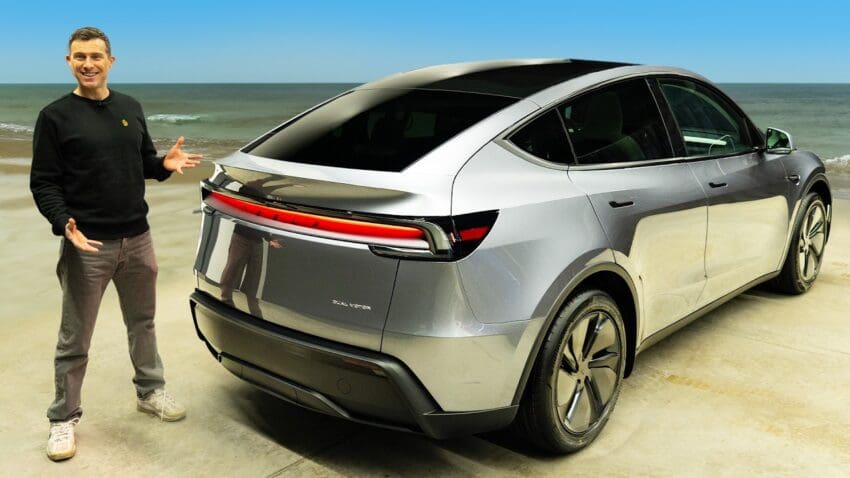
The Supercharger network now covers major routes across continents, while the Model Y remains the world’s best-selling electric vehicle. Tesla’s reach extends further into solar energy and storage, turning homes and cars into one clean ecosystem.
Yet 2025 feels different. According to IG, Tesla’s shares had slid about 30 percent as of March this year. Still ranked ninth among Nasdaq 100 components, Tesla now faces a market that values resilience as much as innovation.
NVIDIA’s Role in Powering Autonomous Intelligence
Autonomous driving has become a data problem, not a mechanical one. That is where NVIDIA leads the pack. Its AI platforms now sit at the centre of both vehicle design and real-time driving decisions.
The company’s DRIVE AGX Thor system, soon to be used by Lucid in its next midsize EVs, supports Level 4 autonomy, where drivers can truly look away.
And they’re also taking their innovations airborne. The chipmaker recently partnered with Joby Aviation to fast-track the next era of autonomous aircraft.
At IAA Mobility, NVIDIA outlined a world where compute defines performance. Its DGX, Omniverse, and DRIVE AGX stack connects cloud simulation to road-ready intelligence. Ranked number one on the Nasdaq 100, NVIDIA powers the EV future through pure computational force.
Apple’s Quiet Steps Toward Vehicle Integration
Apple may have paused its car ambitions, but its impact on mobility remains. Project Titan’s end redirected thousands of engineers toward AI, not assembly lines.
Instead of building a car, Apple now builds the digital layer that supports one. Apple Maps EV routing is alreadyintegrated into Toyota’s battery-electric vehicles, optimising routes, terrain data, and charger selection. The company also holds patents for automated charging port alignment, improving how vehicles connect to power sources.
Analysts suggest this shift makes sense. EV manufacturing offers tight margins and long timelines. Apple’s strategy now focuses on intelligent platforms that link iPhone, Mac, and CarPlay into one seamless mobility experience. No wonder it sits at #2 on the Nasdaq 100 index.
Qualcomm’s Connectivity Engine for Smart Transport
Car software now matters as much as hardware. Qualcomm understands this better than most.
Once known for mobile chips, the company is now a leader in the software-defined vehicle shift. Its Snapdragon Cockpit and ADAS platforms handle everything from entertainment to sensor data in one unified system.
This centralised approach simplifies design and boosts safety for mass-market EVs. High-efficiency automotive processors and the digital chassis framework keep costs down while enabling advanced features.
Ranked twenty-eighth on the Nasdaq 100, Qualcomm powers the intelligence behind tomorrow’s connected transport.
Battery Innovation as the Core of EV Progress
Energy storage drives the pace of electric mobility, and in a significant way. Every improvement in density, cooling, and recyclability extends range and lowers cost.
Firms like Panasonic, CATL, and QuantumScape keep refining solid-state and lithium technologies that redefine performance. These advances ripple across the Nasdaq 100, linking material science with market momentum.
Better batteries mean faster charging, longer life, and a clearer path to fully sustainable transport.
Clearly, electric mobility is no longer a niche experiment. It stands at the heart of global innovation and investment. Every advance in technology and energy reshapes how we move and how the future economy grows. And Nasdaq 100’s top innovators know this all too well to set the pace.