

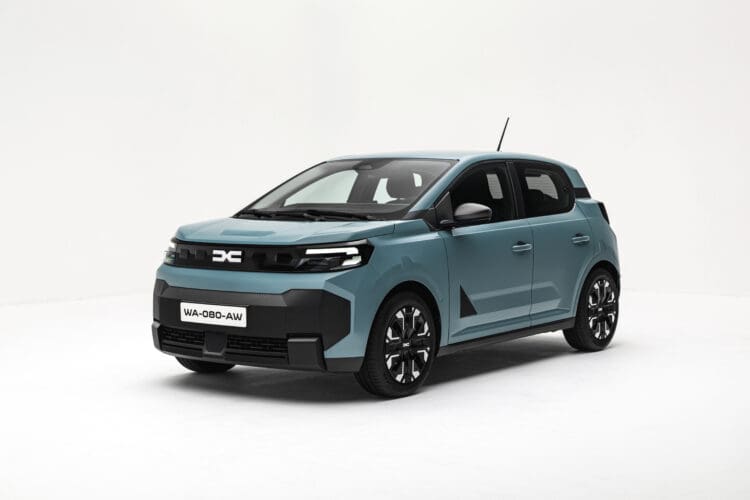
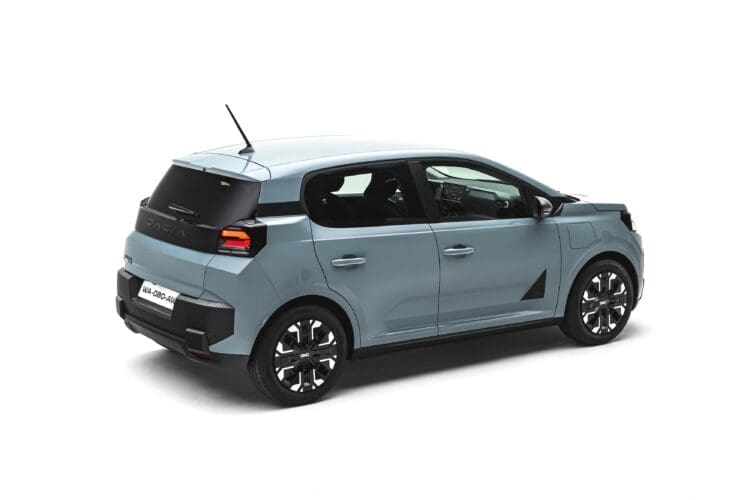


The new Dacia Spring has broken cover for the first time, promising to bring an all-new vehicle that stays true to Dacia’s cheap and simple roots.
The second-generation of Britain’s cheapest EV is significantly bigger than its predecessor but sticks to the simple stripped-back approach to motoring, with modest power and range, and a simple specification.
Developed from a blank sheet of paper in less than two years, the new Spring is built on the Renault Group’s new RG-EV Small platform, and unlike its Chinese-made predecessor, will be built in Europe, at Dacia’s Novo Mesto plant in Slovenia. It is the first of four all-electric models coming from the Romanian budget brand between now and 2030.
Design and dimensions
Visually, there are clear similarities between the old and new Spring, however, the new model is a substantial 15cm longer and 18cm wider than the old model. Dacia says this gives the car a more “robust” stance – in other words it doesn’t look so tall and skinny.

Adding to that are short front and rear overhangs and upright front and rear ends, which give the new Spring a chunkier look. Front and rear bumpers are finished in textured black plastic designed to hide minor scratches, and there are black trip strips between the lights to emphasise the car’s wider stance.
The extra length and width put the new Spring’s dimensions somewhere between the Renault Twingo and Renault 5. They also mean there is more interior space than before. Dacia claims the new model is among the most spacious in the A-segment, and sets a new standard for boot space with a 337-litre boot and optional 18-litre frunk.
Like the exterior, the interior design is deliberately simple. A two-level dashboard and low-set centre console are intended to create an airy feel, and large physical controls manage most functions – including a single button to deactivate ADAS functions. As with the previous model, customers can personalise their Spring with accessories mounted via Dacia’s Youclip system.

All versions of the new Spring features a seven-inch digital instrument panel. Entry-level cars come with the “Media Control” system which pairs a driver’s mobile phone with the steering wheel controls and displays media and call information on the digital instrument panel. Higher-grade cars get a Media Nav Live system with 10.1-inch central touchscreen, sat nav, connected services and wireless Apple and Android mirroring.
Battery, motor, range and charging
The new Dacia Spring comes with just one powertrain – an 80bhp motor paired with a 27.5kWh battery.
Dacia says the new motor will get the 1.2-tonne Spring from 0-62mph in a leisurely 12.1 seconds and on to a top speed of 86mph.
The battery is the same as that used by the Renault Twingo and offers up to 155 miles on the WLTP combined cycle – around 20 miles more than the previous model – thanks to efficiency of 4.89m/kWh. Based on data from existing Spring customers, Dacia estimates a single charge a week will be enough for most owners.
As standard, the Spring only supports 6.6kW AC charging that can operate via a dedicated home charger or standard domestic socket. Upgrading with the optional Charge Pack adds an 11kW AC charger and a 50kW DC charger, which will take the Spring from 15-80% in 28 minutes.
The Charge Pack also adds vehicle-to-load capability for powering smaller appliances from the drive battery.
Trim and equipment
When it arrives, the 2027 Dacia Spring will be offered in two trim levels – Expression and Journey.

Expression models feature 15-inch steel wheels, remote central locking, electric front windows and wing mirrors, manual air conditioning, automatic headlights, rear parking sensors, and the Media Control system with a USB-C port.
Journey upgrades the wheels to 16-inch steel designs and adds a hand-free keycard, 10.1-inch touchscreen with sat nav and connected services, a reversing camera and additional USB-C port.
Price and launch date
The current Dacia Spring is the UK’s cheapest electric car and Dacia says it will stick true to the principle of offering affordable electric motoring. However, the indications are that it will represent a jump in price over the outgoing model, which currently costs under £12,000 thanks to recent aggressive price cuts.
Dacia has said that all versions of the new Spring will be priced below £18,000 when it goes on sale in the UK in 2027. Given that it is expected to undercut the related Renault Twingo and Nissan Pixo, that’s likely to mean a starting price of around £16,000.
Thanks to being built in Europe, the next-generation Dacia Spring may also qualify for the Government’s Electric Car Grant, which would cut between £1,500 and £3,750 from the list price.


