
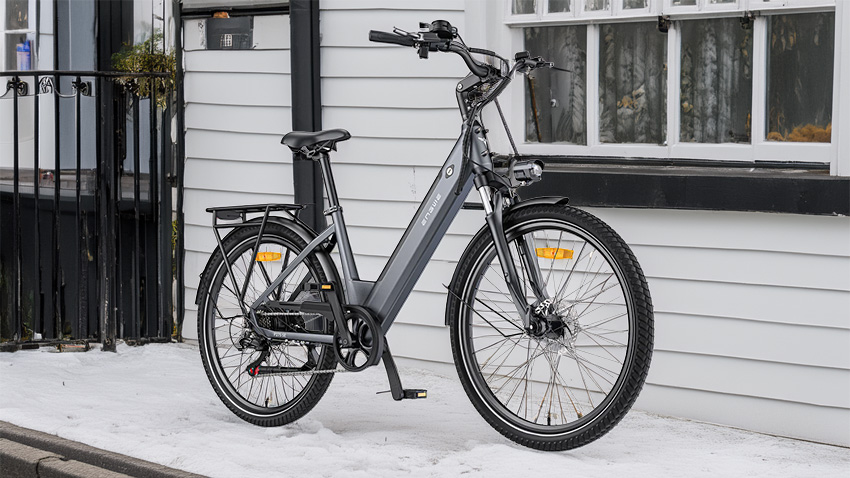
Engwe P275 SE review: affordable, refined, and ready for the daily commute
When I first saw the spec sheet for the Engwe P275 SE – torque‑sensor motor, hydraulic brakes, integrated lights, mudguards and a sturdy rear rack – all for just a whisker over £1,000 – I admit I was sceptical.
Could this really be a practical, comfortable commuter bike rather than a budget compromise? After riding it through UK streets and mixed terrain, I’m pleasantly surprised: the P275 SE is far more than a budget e‑bike. It’s a competent, quietly refined machine that delivers on practicality and daily usability.
The P275 SE arrives requiring a modest amount of assembly – front wheel, mudguards, handlebars, rack and light attachments. It’s not difficult if you’re comfortable with a spanner or two; novices might prefer a local bike shop for the final tweaks. Once assembled, the finish looked tidy and solid. The welds were clean, cables properly routed, and the integrated battery gave the frame a neat, understated silhouette – far more upmarket than its price suggests.
The 6061‑aluminium step‑through frame feels reassuringly sturdy yet not unnecessarily heavy. At around 28 kg, this isn’t a featherweight, but the bike tracks steadily and feels planted under acceleration or when riding through traffic. The upright riding posture, swept-back handlebars and a reasonably padded saddle make for a comfortable, confident ride — and the bike accommodates a surprisingly wide range of rider heights.
On the road: torque sensor and smooth assistance
In town, the heart of the P275 SE is its 250 W rear‑hub motor combined with a genuine torque sensor. From the first pedal stroke, power delivery felt smooth and intuitive – a marked improvement over older, cadence‑sensor‑based Engwe bikes I’ve tested. The motor kicks in the instant you load the crank, giving a gentle but steady boost that fades smoothly as you approach the 15.5 mph assistance limit. It never felt jerky or over‑eager; rather, it just gets you up to speed discreetly and efficiently.
All five assistance levels finish at the same top speed, differing only in power output. For city commuting and flat suburban roads, even the mid‑level settings provided a consistent, effortless ride. On gentle gradients the bike performed fine, making everyday errands a breeze. But it’s fair to say this isn’t a hill‑climbing specialist. On a steep 10 per cent gradient I had to lean into the pedals, and on a particularly punishing 25 per cent slope I walked — though that’s not unexpected at this price point.
Comfort, ride quality and practicality
The P275 SE surprised me with how composed it felt over rough surfaces. The suspension fork is basic, but when paired with 27.5″ × 1.95″ CST tyres, it absorbs urban potholes and worn cycle paths with more grace than one might expect. After two months and a mix of tarmac, cobbles and even thorn‑strewn country lanes, I recorded no punctures – a testament to the tyres’ resilience and the bike’s overall build quality.
Braking is handled via unbranded hydraulic calipers front and rear. After a few rides to bed them in, they offered reliable stopping power and decent modulation. On long, steep descents – which aren’t the P275 SE’s forte – there was a slight tendency for fade under heavy braking load, but for everyday commuting and urban rides they were more than adequate.
From a comfort perspective, the step‑through frame makes mounting and dismounting easy – a real plus for commuters, secondary riders or older users. The swept‑back handlebar encourages an upright posture that’s easy on the back and wrists, and the adjustable stem and seatpost make the bike versatile for different riders. The saddle, while not luxurious, strikes a fine balance between firmness and cushioning — comfortable enough for daily rides without being mushy.
Battery, range and rider experience
Power comes from a 450 Wh battery integrated into the down‑tube. It locks securely, remains centrally positioned for balanced handling, and can be removed for charging — a neat touch for urban users who want to take the battery indoors. Engwe claims a range up to 62 miles, but in my real‑world use I regularly saw between 25 and 30 miles per charge, depending on how much assistance I used and how hilly the terrain was. For a daily commuter covering a few miles each way, that’s perfectly adequate.
One quirk I discovered: when the battery level drops to two bars, the motor cuts out on higher assistance levels and the display flashes “Error 4”. I learned this is part of Engwe’s undervoltage protection system – not a fault, but it can catch you out if you don’t realise what’s happening. With sensible battery management, it’s a minor inconvenience rather than a deal‑breaker.
Even when powered off, the bike remains rideable. Pedalling feels heavier compared to a conventional bike, but unless you need to climb steep hills it’s perfectly manageable — handy for when you forget to charge or decide to conserve battery mid‑ride.
Verdict: a tidy commuter pick for everyday riding
The Engwe P275 SE won’t be anyone’s choice for steep hill climbing or long touring. But as a city commuter or daily errand runner, it hits a sweet spot between value, practicality and comfort. It feels more considered and mature than many budget e-bikes I’ve reviewed: torque‑sensor smoothness, decent hydraulic braking, integrated lights, mudguards, rack, and a well‑balanced frame all add up to a trustworthy everyday rider.
Its compromises – modest power on hills, average lights for unlit country roads, range modest compared with premium e-bikes — are real, but they come with a price tag most mid‑range commuters will appreciate. For under £1,200, the P275 SE delivers more than you might expect: a refined, functional, and user‑friendly e-bike with genuine commuting credentials.
If you’re after a reliable, straightforward e-bike for city commuting , or a no‑frills, good‑value ride for errands and short-distance travel, the Engwe P275 SE deserves a serious look.