

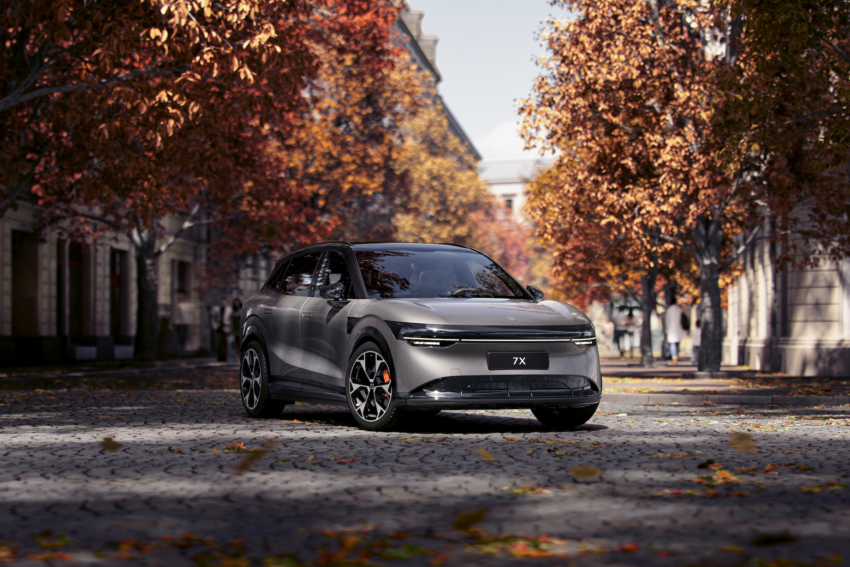
More than 50% of drivers open to Chinese EV ownership
A recent survey from Zeekr has found that 53% of EV drivers would be open to owning a Chinese EV, given China’s emphasis on EV batteries and charging tech.
The study asked 8,000 people in the UK, Belgium, Denmark, Germany, The Netherlands, Switzerland, Norway, and Sweden a series of questions including their attitudes towards EVs, feelings towards Chinese brands, plus what they consider to be the biggest hurdles to EV ownership.
Zeekr found that in the United Kingdom, Europe’s second-largest car market behind Germany, that 59% of respondents said an EV’s country of origin was not important. In Sweden, meanwhile, 62% of those asked between ages 35 to 44 said they were looking to make the transition to an EV by the end of 2028.
The biggest hurdles to EV ownership were cited to be purchasing costs, charging costs and speeds, plus range.
On the back of the findings, Lothar Schupet, the acting CEO of Chinese-owned Zeekr said: “The benefits of electric vehicles are widely understood but we appreciate that not every market or every age group is as receptive to them as others.


“We wanted to look even deeper into the positive and negative views that consumers across Europe have towards EVs in general and Chinese EVs in particular to better understand the barriers to entry – both real and perceived.
“The survey we commissioned does exactly that, and will help us to create even better EVs that will help further accelerate the transition to e-mobility throughout Europe.”
China’s focus on EVs has seen the country roll out a series of technological advancements at a rate of knots – for example, the BYD e-platform has a peak charging rate of 1,000 kilowatts, meaning it has a charging rate twice as fast as Tesla’s 500kW superchargers and can add up to 250 miles of range in around five minutes.
China’s largely-automated mass EV production methods allows it to produce cars quicker and more effectively than some Western counterparts, and also undercut them in terms of pricing. For example, the upcoming Xiaomi YU7 SUV will be priced from under £30,000 in its home market, despite packing up to 681bhp and rivalling the Tesla Model Y for size.
Moreover, Chinese automotive giants such as Geely – the owners of Zeekr – have acquired several Western car manufacturers in recent years including Volvo, Lotus, and Smart. SAIC, meanwhile, owns MG.