

The MVP of the MPV world
It lacks the premium polish of the ID. Buzz but in construction, space, practicality, efficiency and value, the Kia PV5 is a nailed-on winner.
People carriers are back, baby.
Forget your cramped “seven-seat” SUVs. If you want a properly practical vehicle for carrying a large family or running a hotel or airport shuttle service, you need a van-based MPV like the Kia PV5 Passenger.
The PV5 Passenger is, as its name suggests, the people-moving partner to the PV5 Cargo, Kia’s first ever commercial vehicle. It’s a ground-up EV that’s looking to meet the needs of larger-than-average families and businesses by filling the gap between smaller van-based MPVs like the Citroen e-Berlingo and larger vehicles like the Ford E-Tourneo Custom.
With prices starting from under £35,000, an incoming seven-seat option and a “long-range” powertrain as standard, it’s also looking to swipe potential buyers from VW’s trendy but pricey ID. Buzz.
Design and interior
Kia’s designs are usually a pretty successful affair. The so-called Opposites United philosophy has served its EV line-up well with striking cars like the EV6 and EV9. Sadly, things have gone awry with the PV5.
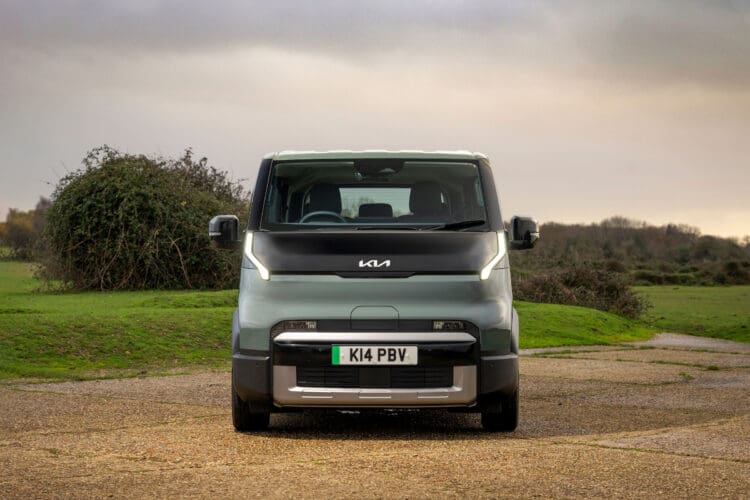
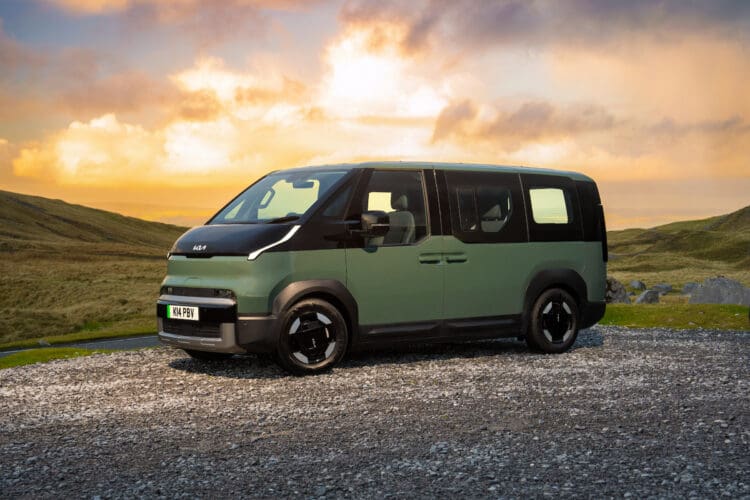
There’s only so much you can do with the basic van shape, so overall, the PV5 is a typically big and boxy affair with a short front end, slab-like sides and virtually vertical rear end.
Part of the problem is that in order to try and make the PV5 stand out, Kia has done something weird at the front. The massive black “visor” that wraps beneath the windscreen and around the A pillars gives an odd gormless look. That’s not helped by the slimline vertical lights pushed right out to the edges of the vehicle, or the peculiar low-set lights mounted just above the segmented lower grille.
The other problem is that the PV5’s nearest rival – the VW ID. Buzz is an object lesson in how to adapt the basic van shape into something stylish and cool.
That being said, ding one of those stylish panels on the Buzz and you’re looking at a big repair bill. On the PV5 however, many of the elements of the exterior trim are more utilitarian and rugged, and designed to be replaced individually, cutting repair complexity and costs.
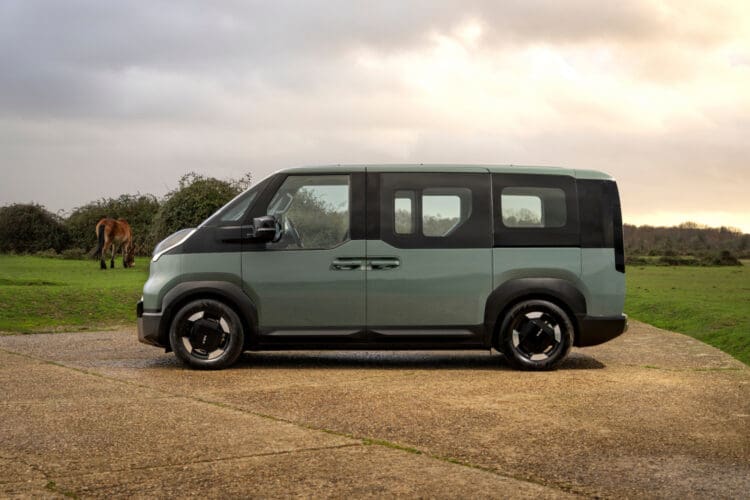
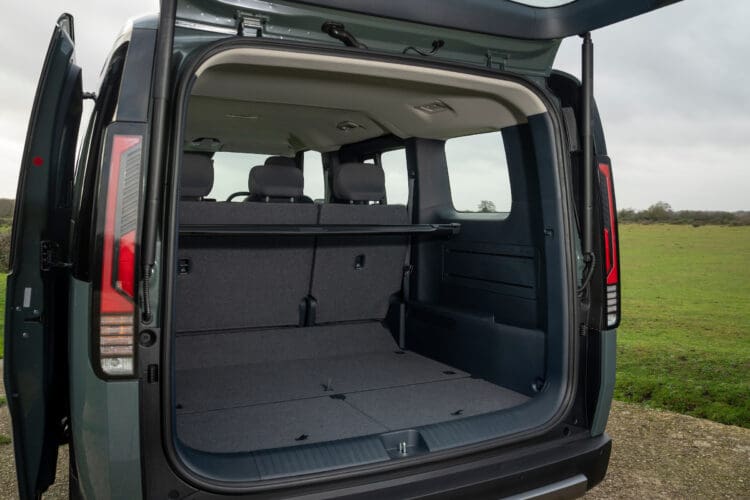
In the van-based people carrier market, looks are secondary to practicality, and inside the PV5 scores highly. The rear bench is flat and wide and can easily accommodate three adults. Legroom of 995mm and the tall roofline means that even the lankiest of passengers won’t be able to complain. While there’s a seven-seat model coming, my test car was a five-seater, meaning a massive 1,330 litres of boot space and a helpfully low loading height. So you can carry five people and as many “lifestyle” accessories as you like with ease.
Up front, the front seats are mounted on a raised platform, meaning a knees-up driving position that’s more like a small hatchback than a traditional van. Nonetheless, there’s decent adjustment and space, and incredible visibility thanks to massive, low-set side windows.
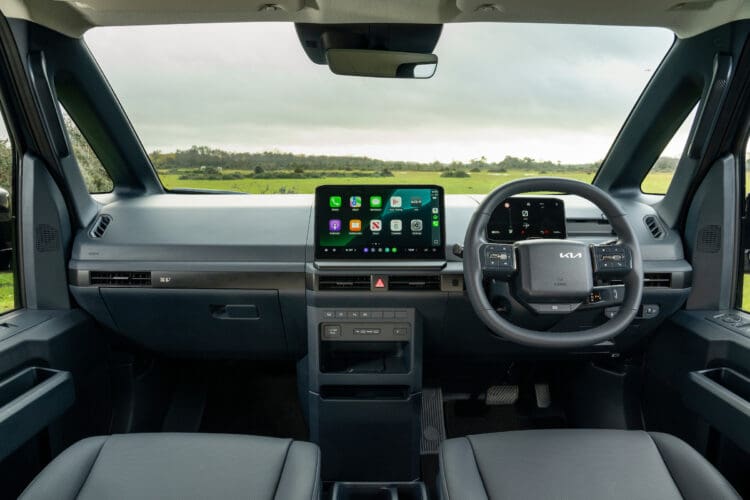
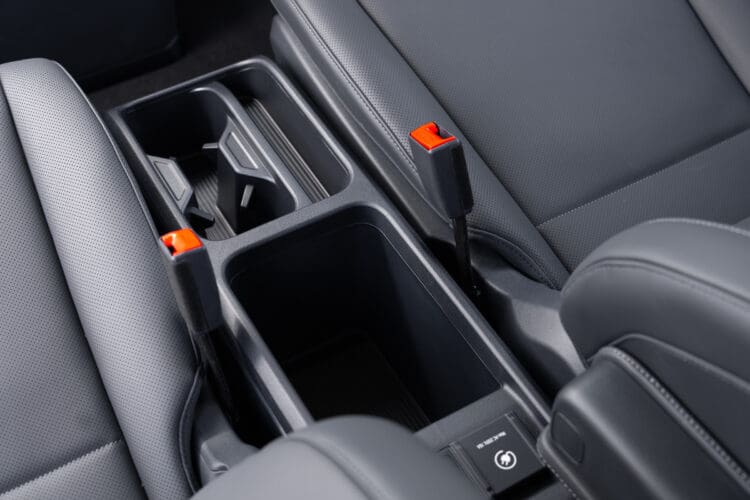
There’s loads of storage around the cabin, from three levels of door pockets to a pull-out drawer in the dashboard, a deep centre bin and a dashtop tray. However, there’s also a feeling that this was very much developed as a commercial vehicle first. The storage solutions feel designed for the delivery driver on the go and the entire cabin is finished in drab shades of grey.
Everything is made from the usual robust materials and feels built to handle a lifetime of hard knocks, but it’s a depressingly bland place to sit and feels far more like a converted delivery van than a passenger-focused vehicle.
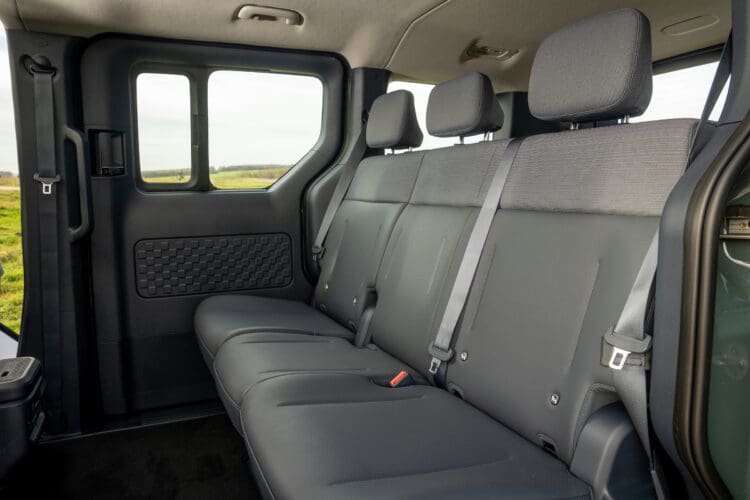
Other areas where the panel-van origins show through are in the back, where there are no door pockets, no cupholders and no air vents – all things VW passengers enjoy. There are at least USB charging ports in the rear of the front seats and handy seat-back pockets.
Technology and equipment
Kia’s infotainment systems, while not always class-leading, are usually pretty reliable and user-friendly. It’s a shame, then, to find that the PV5 marks a shift to a more complex, less intuitive setup.
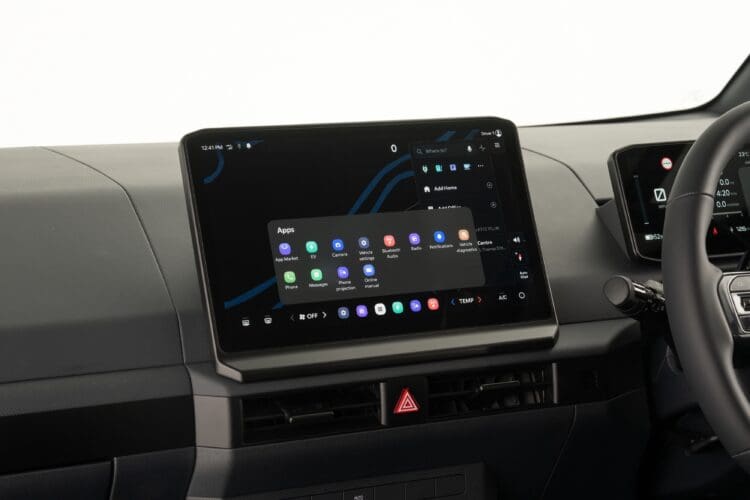
Almost all the van’s functions are managed via a 12.9-inch touchscreen running a completely new interface. It’s more packed with data and functions than other Kia systems but also more confusing, with an unintuitive menu system and tiny on-screen icons that are hard to hit while stationary, let alone once you’re on the move.
This being a brand-new ground-up EV, there are plenty of gadgets as standard, ranging from wireless smartphone mirroring and high-powered USB charging to seven years’ free connected services. The PV5 passenger also gets plenty of driver aids, from highway assist driving to safe exit alert and the latest forward collision detection.
Range, battery and charging
Kia offers the PV5 Passenger in just one powertrain configuration – the so-called Long Range variant.
This mates a 71.2kWh battery to a 160bhp front-mounted motor. In the five-seat version I tested, that means a WLTP range of 256 miles, with energy consumption of 3.2m/kWh.
Testing on mostly rural roads in chilly November, I saw consumption hover between 3 and 3.1m/kWh and a predicted real-world range of 245 miles – impressive given the van’s size and weight. That was mostly with just one or two passengers on board, however.
Peak DC charging of 150kW should top the PV5’s battery up from 10-80% in under 30 minutes – quick but not as quick as the 200kW offered by the ID. Buzz.
Performance and driving
The PV5 Passenger’s 160bhp/184lb ft motor takes an easygoing 10.6 seconds to get from 0-62mph, but most of the time it feels punchy enough. Something like an ID. Buzz or Ford Tourneo Custom, with their 282bhp, definitely feel more responsive, but in most situations the PV5 has enough get up and go to get up and go.
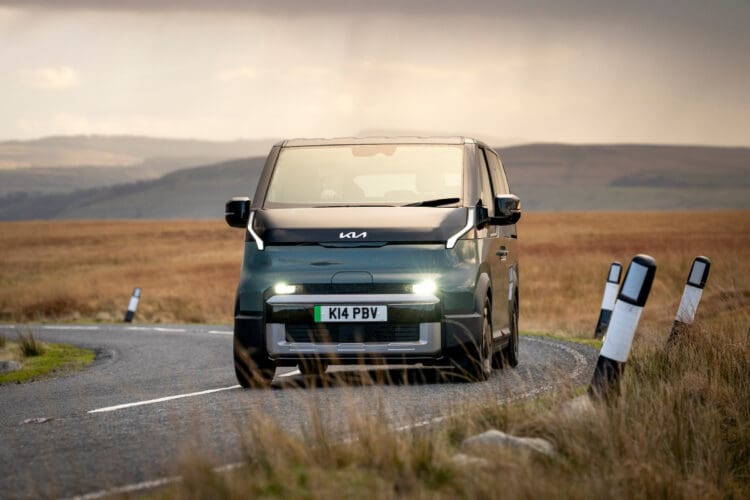
From the wheel, you’re aware of the PV5’s size, especially its width, but there’s excellent visibility and an incredibly tight 5.5-metre turning circle, so manoeuvring isn’t a problem even in tight situations.
And, despite its size, it drives remarkably well. Yes, you’re aware of its height and width but there’s some weight and feel to the steering, strong four-stage regenerative braking and impressively controlled ride comfort. Honestly, it’s better to drive than 90% of the Chinese SUVs I’ve tested this year.
It’s also impressively refined for what amounts to a big glass and metal box on wheels, with none of the boominess usually associated with van-based vehicles.
Price, trim and rivals
The Kia PV5 Passenger range starts at £33,195 for the five-seat model in Essential trim.
The Plus trim I tested starts at £37,975 and the soon-to-launch Elite trim comes in at £39,695.
Stepping up to the seven-seat version with its 2-2-3 configuration takes prices to between £36,995 and £41,975.
Essential models get 16-inch steel wheels, auto-dipping headlights, automatic air conditioning, keyless entry and start, the 12.9-inch touchscreen and digital dials, wireless Apple and Android mirroring, reversing camera and front and rear sensors, and adaptive cruise control.
Plus adds alloy wheels, heated front and rear seats, a heated steering wheel and tinted rear glass, while Elite will bring powered rear doors, cooled front seats, side parking sensors and an around-view camera.
Thanks to its size and configuration, the Kia PV5 Passenger occupies an odd space somewhere above the likes of the Citroen e-Berlingo (although it’s cheaper) and Ford E-Tourneo Courier but below the Ford E-Tourneo Custom or Citroen E-Spacetourer.
Its most obvious and immediate rival is the Volkswagen ID. Buzz, which is a similar size and offers similar seating options. It also comes with the promise of a longer range and a more car-like ambience, but it’s anywhere between £24,000 and £33,000 more expensive.
Verdict 4/5
That price differential is a massive element in the PV5 Passenger’s favour. But it’s not the only one.
The PV5 Passenger is a credible people mover for those who need more space than a car-based MPV. It’s roomy, practical and comfortable, and offers decent range, impressive efficiency and a rock solid build quality.
The fact it’s cheaper than plenty of B-segment SUVs is just the icing on the cake.
For
- Spacious and practical
- Impressive efficiency
- Outstanding value
Against
- Peculiar design
- Grey, van-like interior
- Fiddly infotainment
- Price
- £37,975 including ECG (£38,725 as tested)
- Powertrain
- Single-motor, front-wheel-drive
- Battery
- 71.2kWh
- Power
- 160bhp
- Torque
- 184lb ft
- Top speed
- 84mph
- 0-62mph
- 10.6 seconds
- Range
- 256 miles
- Consumption
- 3.2m/kWh
- Real-world range
- 245 miles
- Real-world consumption
- 3m/kWh
- Charging
- up to 150kW
- Boot space
- 1,330 litres
- Insurance group
- 30D