
Driving an EV in winter: Advice on handling snow and ice from the Grönholms
As road conditions get tricky, we speak to World Rallycross and World Rally icons Niclas and Marcus Grönholm about how to stay in control and what to do if your EV gets into a skid
With December in full swing, it’s that time of year when it’s dark by 4pm. Even worse, the cold and wet weather makes road surfaces slippery and unpredictable even for the most careful of drivers.
If the roads aren’t covered in wet leaves or standing water, they’re coated in a dangerous layer of ice or snow.
While driving an EV is usually an easy and relaxing affair, such treacherous conditions can make it more stressful and increase the chance of losing control.
So, to offer some guidance on the best way to stay in control and what to do should your EV end up in a slide or skid we spoke to an expert.
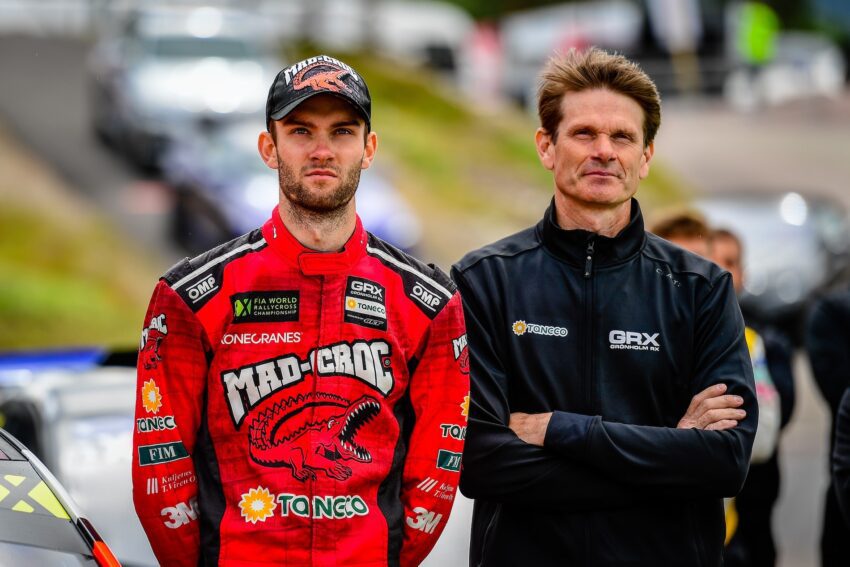
But not just any expert, we spoke to Niclas Grönholm, who claimed second place in this years’ FIA World Rallycross championship at the wheel of an all-electric car and who was born and raised in Finland, a country famous for its challenging driving conditions and expert racers.
Drive to the conditions
“I think the best thing you can do to avoid a road accident in winter conditions is to not drive too fast – it’s that simple,” the Finn says deadpan.
“Joking aside, the biggest mistake is that most people drive faster than they are capable of handling and they don’t properly read the conditions around them.”
When mentioning “conditions”, the 29 year-old points to the snow, rain, and ice that’s been battering Northern Europe for what now seems like 376 years. Snow isn’t just snow, and ice isn’t just ice.
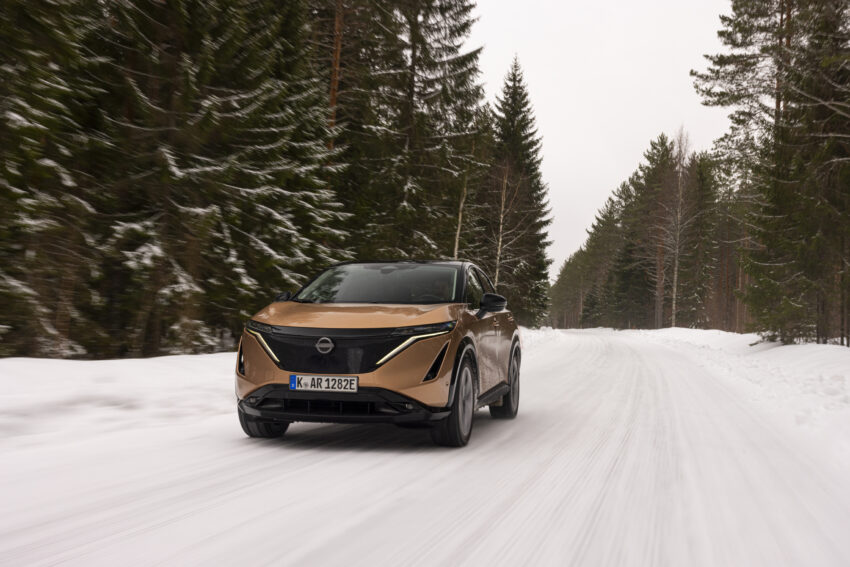

“You have slush and black ice, and when it’s very cold in the minuses, then you have this packed snow,” he explains.
“Understanding how to position the car correctly is key here. When it’s slushy, it’s likely there will be some black ice, so look to see if you have some snow as a buffer either side – you can use that to generate more friction between the tyre and the road surface.”
Referring to growing up on Finland’s south coast he adds: “Think of it when you walk on ice and you’re walking like a penguin.
“When you get on some packed snow, you hear this crunching sound beneath your shoes and can walk normally. That’s exactly what you’re looking for with the car.”
Understand your EV’s drivetrain
As part of understanding road conditions, the Finn urges motorists to learn their EV’s drivetrain. Is it front-wheel drive, rear-wheel drive, or all-wheel drive? This will affect how you should react if it begins to go wrong.
Niclas’s overarching piece of advice, though? “To absolutely not panic.
“Hitting the brakes and locking the wheels, that’s the worst thing you can do. It’s a perfectly normal human reaction, mind, as you’re in trouble.
“When it comes to a FWD car, if you begin to slide, turn into the direction you want to go, then apply the amount of steering, throttle, and brake you feel is right to counteract it,” he continues.


“RWD is a little different, because you should turn in the opposite direction but not make too many steering changes. You can change the car’s direction by making very small throttle inputs, and that should correct things as the weight transfers.
“The key with an AWD car is to keep the wheels always pointing almost straight. It’s not hugely different to FWD, in that you should ideally steer into the slide and use the throttle to correct the course.”
The power of regeneration
As the final part of our online driving lesson, I ask Niclas whether an EV’s regenerative braking system is a friend of the driver or not. This question, after all, has been one oft-considered in EV Powered HQ throughout this year.
“To be honest with you, I haven’t had too much experience with regen in winter conditions,” he admits. “But regen slows down the car’s motors without locking the tyre, so it’ll let you regain control over the car without having to ruin any of your steering or brake inputs.”
Like his dad, Niclas is far from self-aggrandising. He wraps up his vehicle dynamics class with a self-deprecating “this is all something very hard for me to explain, though.”
Virtual driving lesson over, Grönholm recounts his experience of the notoriously tough Finnish driving test to share some first-hand wisdom.


While passing doesn’t necessarily take longer than it would do in the UK, he reveals that learners attending driving school during the summer months have to attend winter driving lectures along with a course in “perstuntuma” – a term that roughly translates as “feeling the car’s grip”.
“To prepare us for the all sorts of weather we have up here in Finland, we have to go on this slippery track where we’re required to make the right decisions depending on the conditions.
“If I had my way, I’d make it mandatory for people to do an ice driving course – whatever you drive, it’ll help you understand your car better, help you become a better driver, and make the roads safer for everyone.”
And if you were wondering, Grönholm passed his driving test the first time and has never had a road accident. He does, however, cite last year’s Savonlinna Rally in the Finnish Rally Championship (FRC) as the “stupidest” crash in his rallying career.
“This accident actually ties into what we were discussing at the start,” he wraps up. “I was running on studded tires and ended up on the slush. At that point, I had no grip and me and my co-driver Samu [Vaaleri] were pretty much passengers by that point.
“It was game over and we ended up in a ditch,” he concludes, still deadpan. “If there’s anything to take from our conversation, then it’s stay out of the slush!”
‘Don’t drive like an idiot’
A chat with the Grönholms wouldn’t be complete without a word with Marcus.
As a man with 30 World Rally victories, including five on the icy wastes of Rally Sweden – a stat that makes him the event’s second most successful driver ever – when he talks, we all should listen.
“Driving fast on the snow might look spectacular, but it’s not big or clever to do that on the public roads,” the elder Grönholm points out.
“When I was sliding about on the snow back in the day, it was always done in a controlled environment and we were all professional drivers. On public roads, take it easy, read the roads, and know your vehicle before setting out – it’s not a competition. Don’t drive like an idiot.”