



Polestar has taken the wraps off its Formula 2030 concept car, offering the biggest preview yet of its future design language.
A “practical, four-door sports car”, the concept is the brainchild of Polestar’s chief designer, Phillipp Römers, who joined the brand from Audi in 2025.
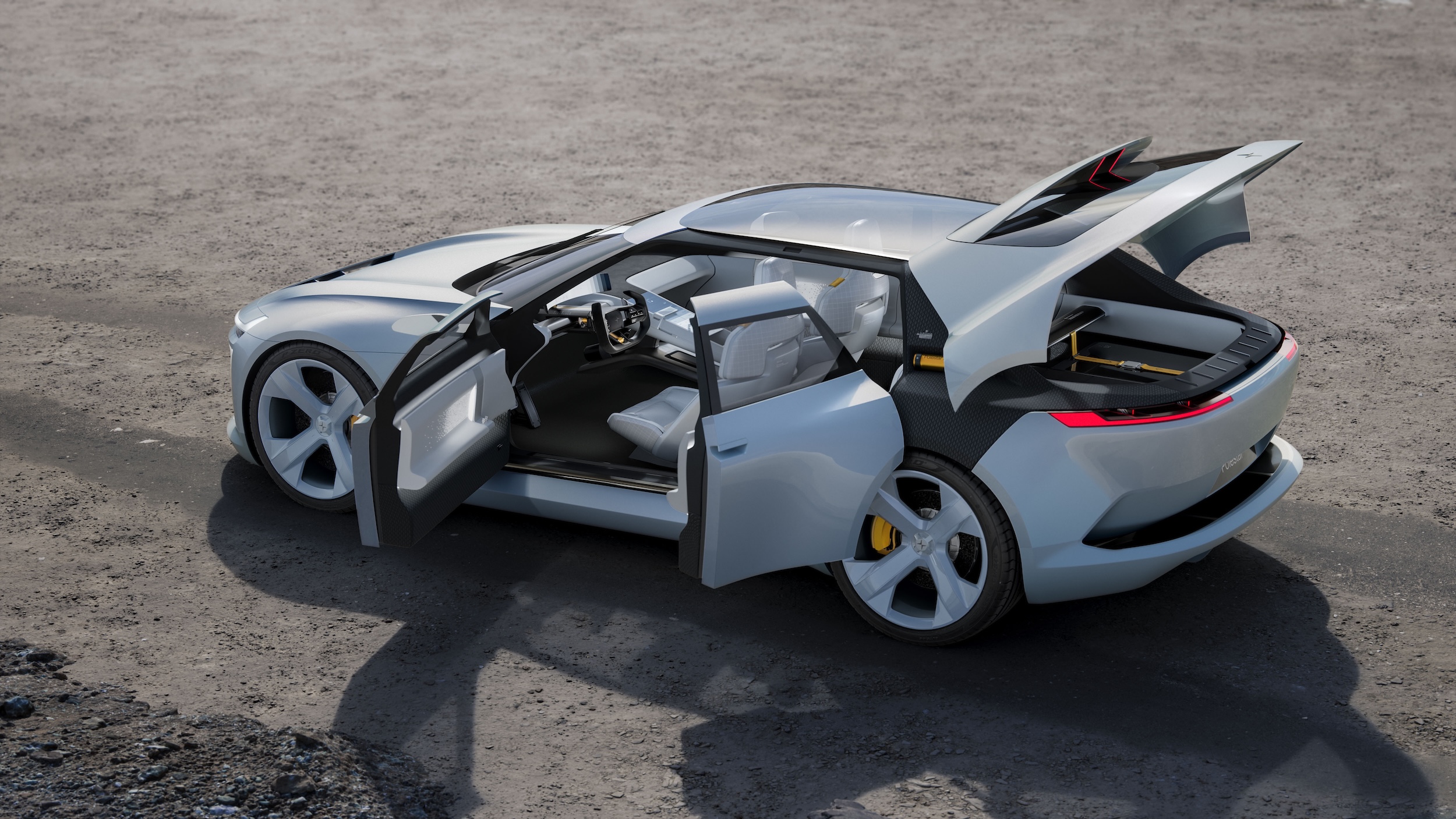
While the Polestar Formula 2030 isn’t scheduled for production, its design is “a physical embodiment” of how the Swedish firm will apply its “core values of of design, performance and sustainability to the next production cars” starting with the next-generation Polestar 2 in 2027.
Polestar Formula 2030 concept exterior design
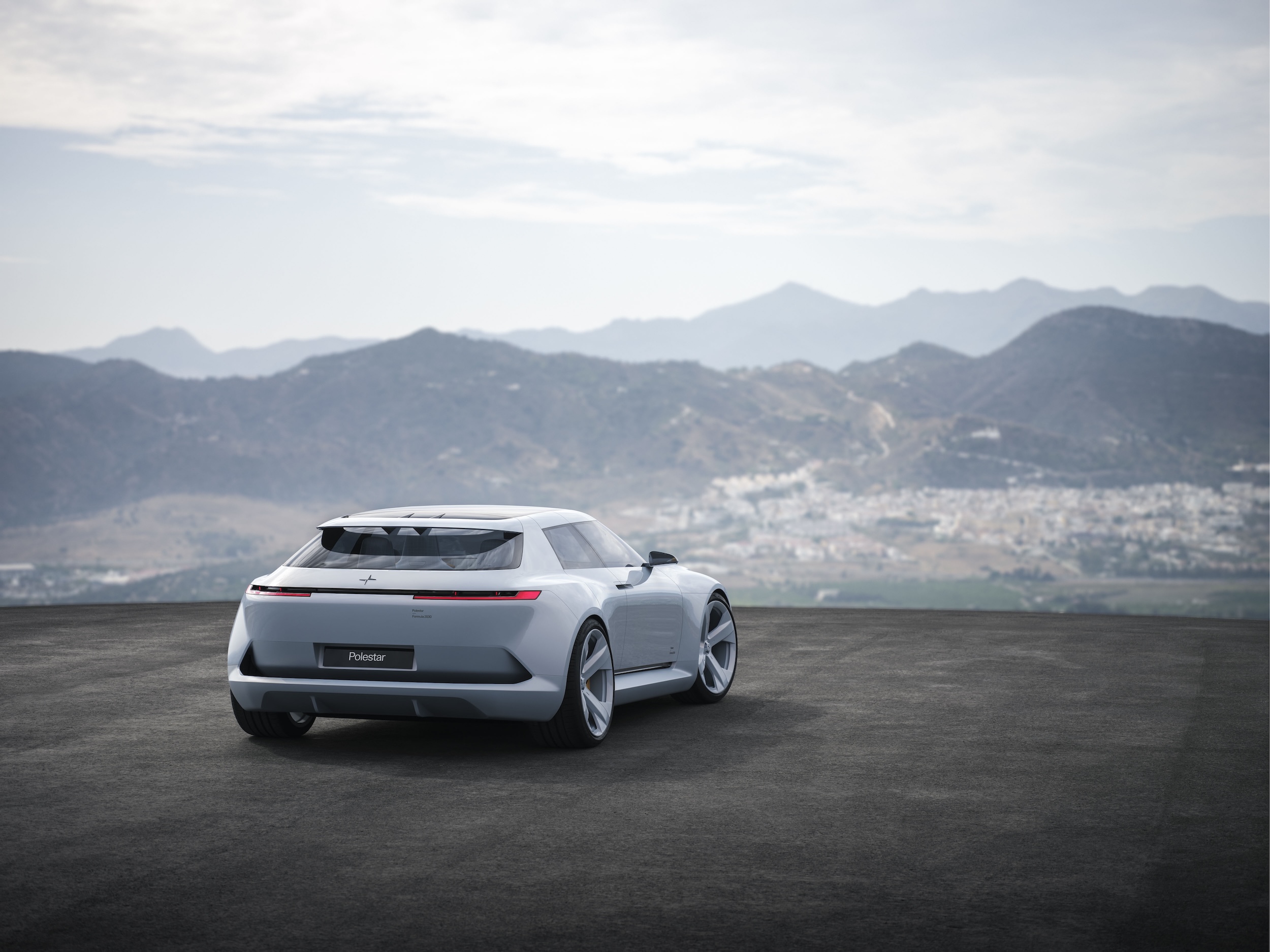
Measuring 4.6 metres long by 2m wide, the Polestar Formula 2030 rides lower than the Polestar 5 GT. Römers’ design moves away from the SUV bodystyle that has dominated the EV industry for so long. Instead, it brings together aspects of estate, hatchback, and coupé with the brand’s signature minimalist Scandinavian aesthetic.
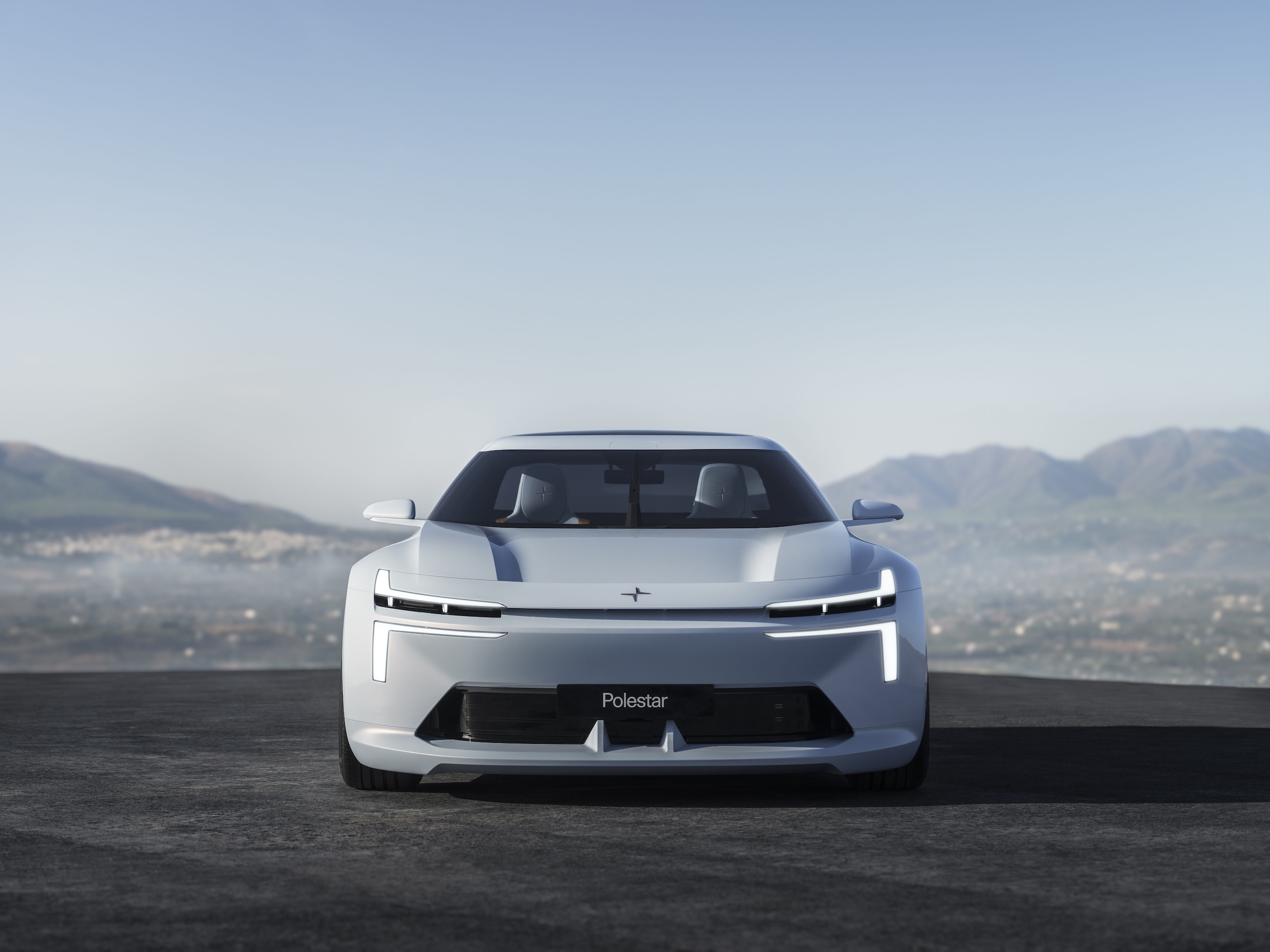
The Polestar Formula 2030’s prominent use of glass across the tailgate, panoramic roof, and cab-forward cockpit invokes elements of the SAAB 900 and the Volvo C30 – cars both considered to be modern classics from Sweden.
At the front, the latest iteration of Polestar’s split ‘Dual Blade’ headlights hint at the face of the 2027 Polestar 2. The S-duct on the bonnet’s leading edge – an aero device introduced on the Polestar 3 – and headlight configuration will also feature on the Polestar 7 SUV, a model scheduled to arrive in 2028.
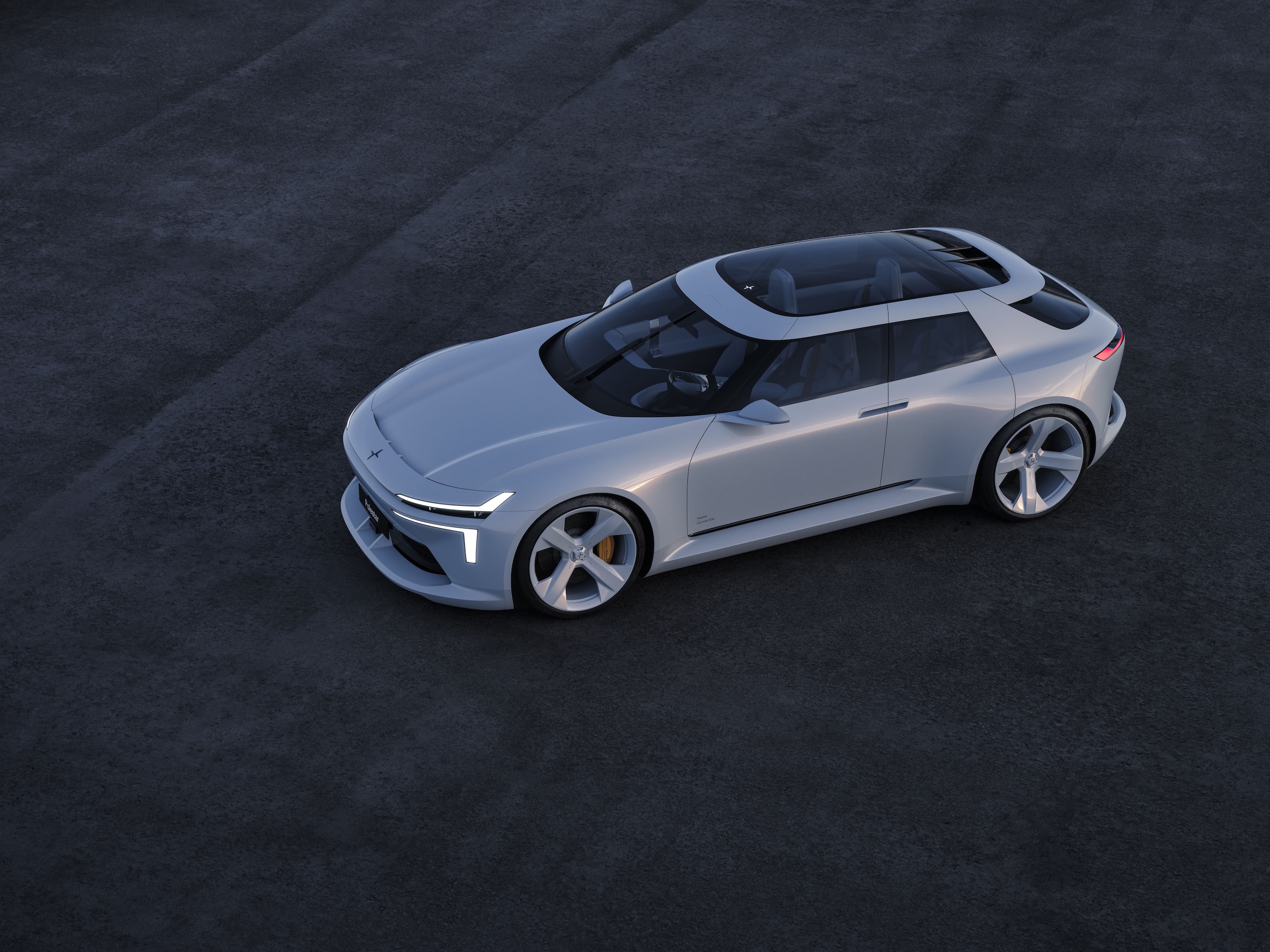
Leaning into Polestar’s position as a performance-focused brand, the Formula 2030 concept rides on 22-inch wheels, and the flared rear end is finished with two narrow light clusters positioned beneath a roof mounted spoiler and bumper-incorporate diffuser. The colour, dubbed ‘Nitrogen’, is exclusive to the concept and was developed to react dynamically to natural light.
Interior
Open the Polestar Formula 2030 concept’s pillarless ‘suicide’ doors, and the cabin is another glimpse into Polestar’s future. A curved instrument binnacle sits in front of the driver, while the dashboard flows – once again, like the C30 – into the centre console. Like Polestar’s current line-up, a 12.2-inch central display runs Google built-in, and the unit can emerge from or lay flat against the dashboard.
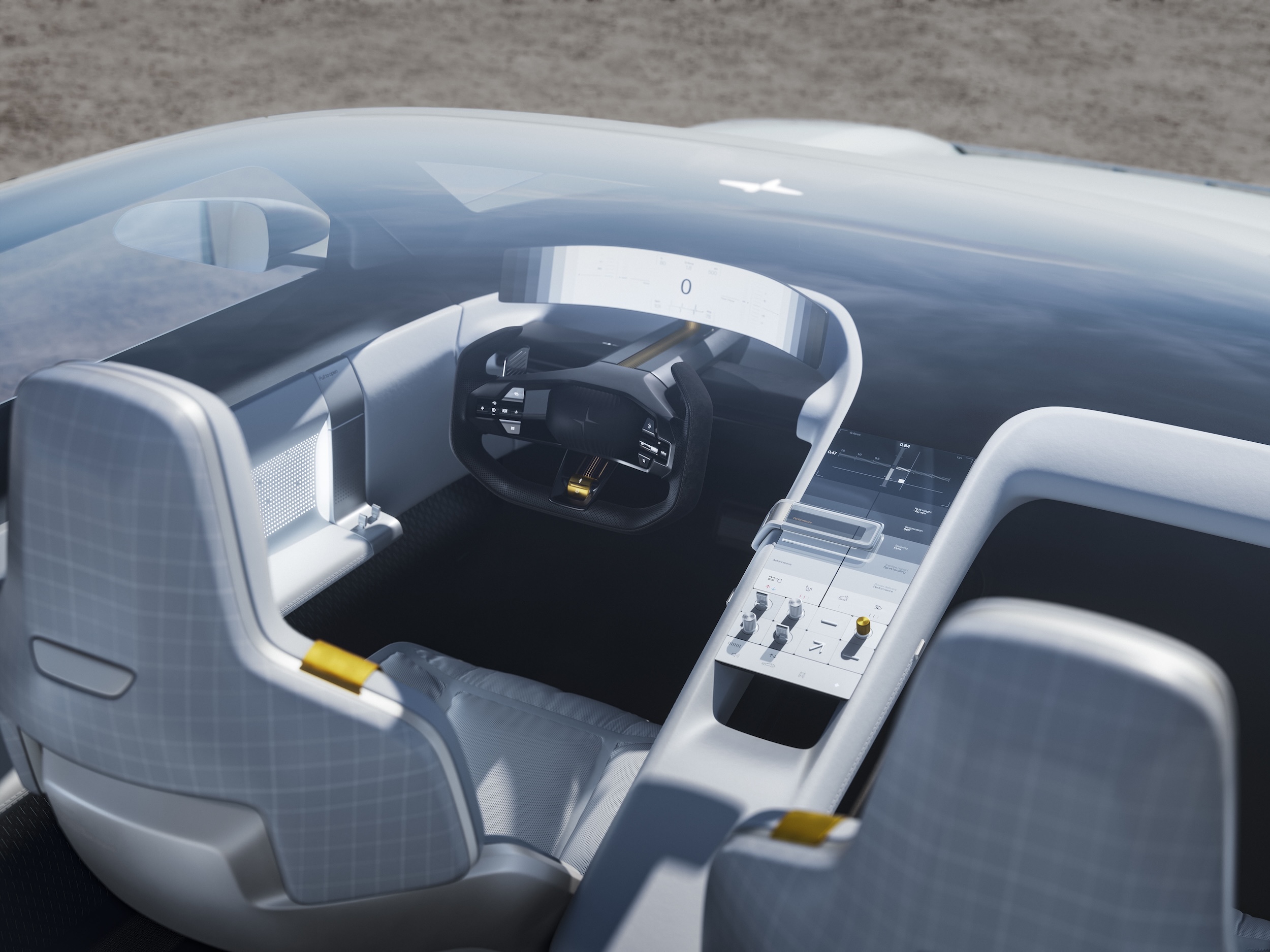
In line with CEO Michael Lohscheller’s promise to move Polestar away from its current trajectory of predominantly digital interiors, a panel beneath the screen is finished entirely with purely physical switchgear. According to Polestar, these rocker switches and rotary dials be swapped depending on the driver’s preferences.
Inside and out, Polestar continues its design trend of adding labels to components. The Formula 2030 name is printed on the lower edge of the front door and the bootlid, while the steering column’s measurement is also labelled. The interior door handle and the exposed rear strut are, too.
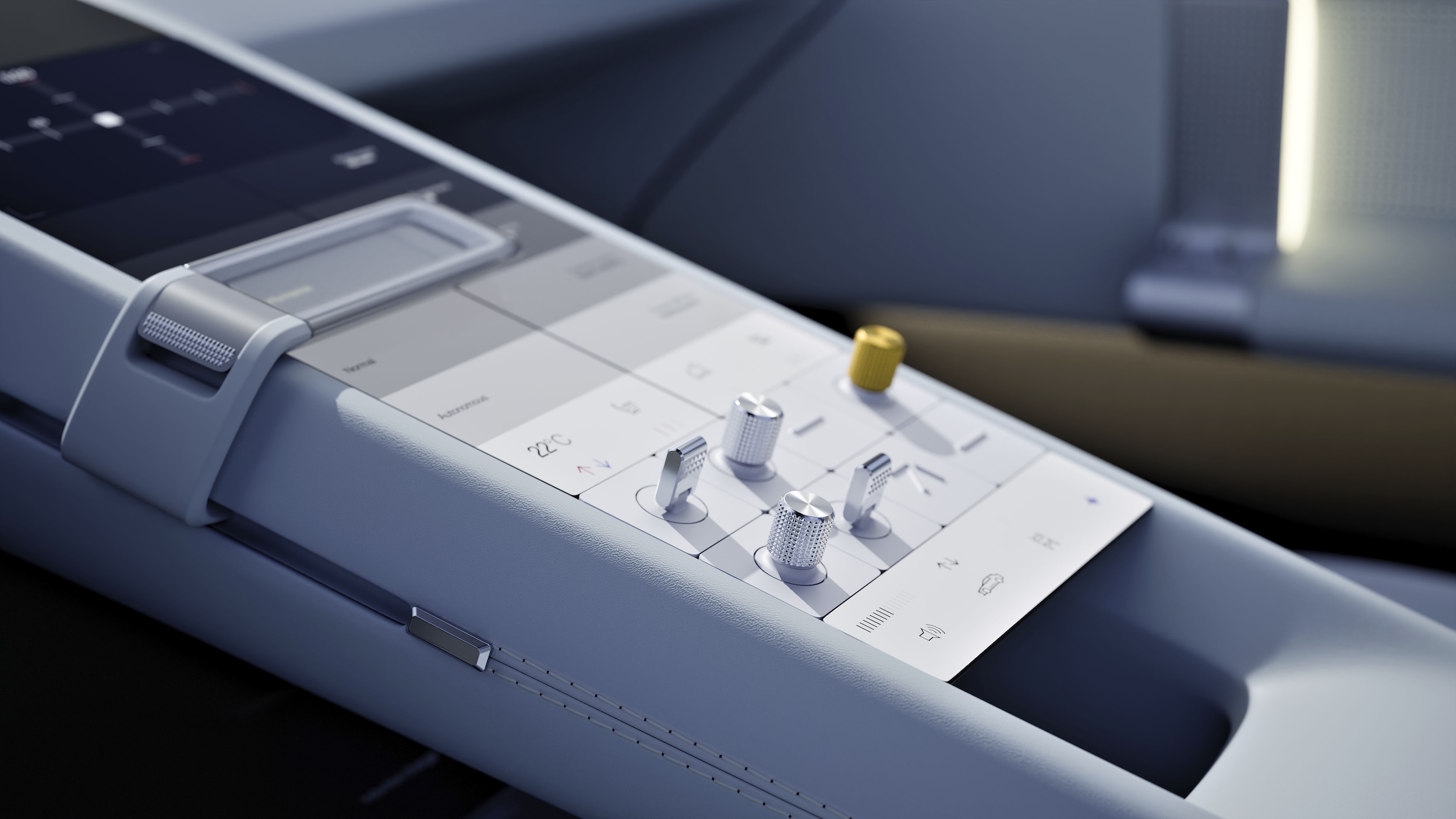
The seatbelts, Brembo brake callipers, valve caps, bonnet struts, and Ohlins manually-adjustable suspension are finished in ‘Swedish Gold’. Also known tongue-in-cheek as ‘Swedish Racing Green’, this proprietary colour is reserved exclusively for Polestar’s performance models.
Polestar Formula 2030 concept sustainability and range
Like design, sustainability is a key pillar to Polestar’s brand positioning. The Formula 2030 concept introduces new sustainable elements we expect to see on future models.
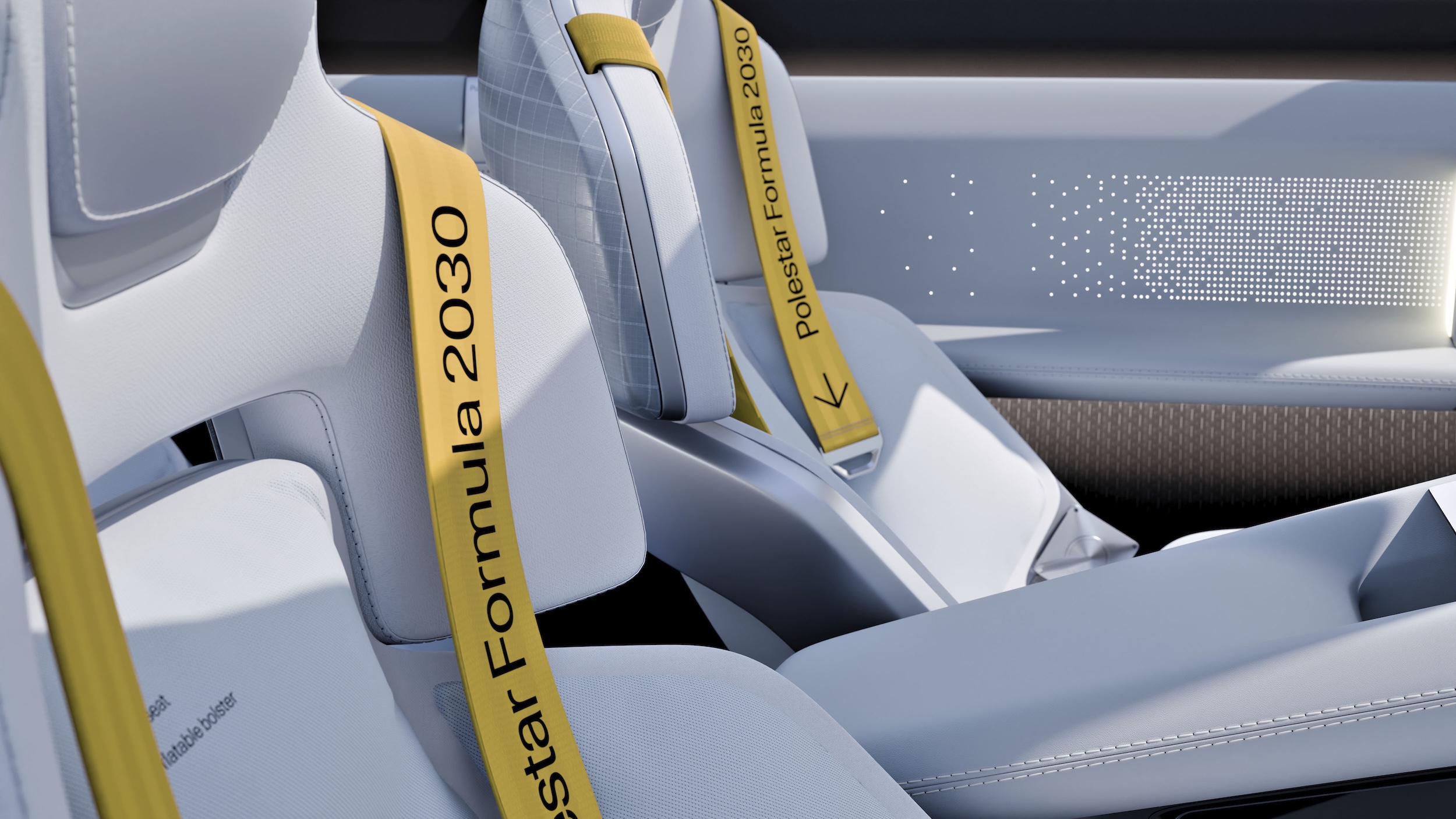
The car’s galvanised steel panels are sourced from low-emission factories, while the back seat is fashioned from a bio-based composite combining flax and bio-based polypropylene developed by Swiss cleantech firm Bcomp. Underneath, the structure is said to be made from a natural fibre composite. By adopting a mono-material production method, the Polestar Formula 2030 concept is fully recyclable come the end of its life.
Given that the Polestar Formula 2030 concept remains purely a design study, reports suggest that it could be fitted with the 100kWh battery used in the Polestar 4, which can achieve up to 391 miles on a single charge.


