
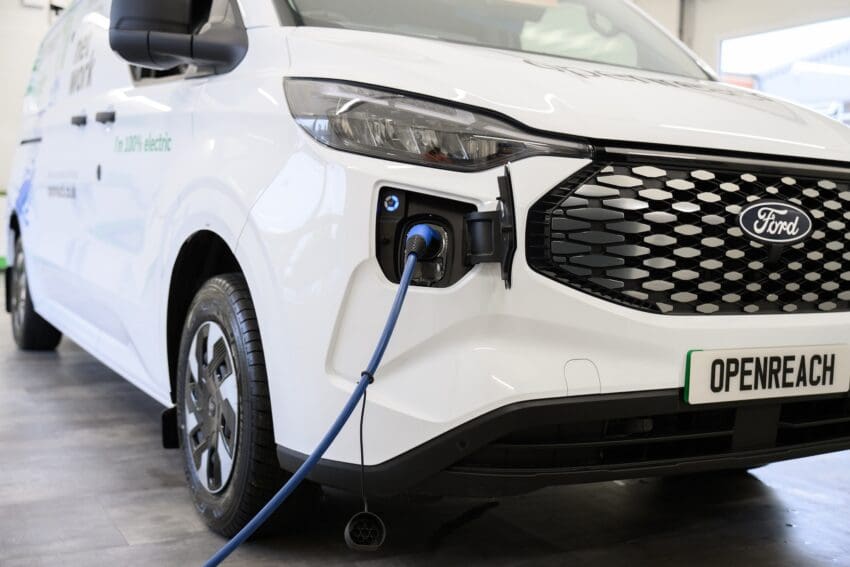
Slow charging times holding back electric van adoption
The adoption of electric vans is being hindered by their slow charging times, says the Association of Fleet Professionals (AFP).
Most electric vans from major manufacturers are rated from around 50kW to 125kW. This translates into an average 10-80% charge time of around 40 minutes in ideal conditions. Not only is this slower in real world conditions, all-electric cars such as the Volvo ES90 and Lotus Emeya can take charging speeds of anywhere between 350kW and 400kW.
Paul Hollick, the AFP chair explained that charging speeds are “a bigger real-world frustration” than issues surrounding range and payload.
“As discussed at a recent meeting of our megafleets committee, which consists of our members who operate very large fleets, charging speeds tend to be a bigger real-world frustration,” he said. “Having a driver sitting around for an hour while their van charges is expensive.

“If vans were capable of faster charging then, to a significant extent, other issues affecting them tend to become more manageable. For example, the negative impact of higher payloads on range becomes less important if you can recharge to 80% every 125 miles in 15 minutes.”
Hollick added that AFP members “would be willing to pay for faster charging capacity” and that fleet operators would be more open to electric vans if a 10-80% charge was doable in 10-15 minutes.
“If a van can charge to 150kW, fleets need to get as close to this figure as possible from public chargers. Too often, drivers are charging at 50kW because of the high number of other vehicles tethered.”
Hollick’s observations are another blow for electric vans. The October edition of the 2025 Arval Mobility Observatory Barometer found that UK fleet managers now expect electric vans to make up just 14% of their total fleet by 2028 – a 15% decrease from 2024, and 18% in 2023.
Despite the issue of charging speed, the United Kingdom’s public charging network continues to grow. In late October this year, the the Department for Transport and Office for Zero Emission Vehicles showed that 15,979 new public chargers had been added to the network since October 2024, a 23% year-on-year increase.