Skoda Peaq: Czech brand confirms name of new seven-seat EV
Skoda has revealed that its upcoming seven-seat EV will be named the Skoda Peaq.
The all-electric equivalent to the Skoda Kodiaq, the Peaq will make its global debut in summer 2026 ahead of an expected launch in late 2026/early 2027.
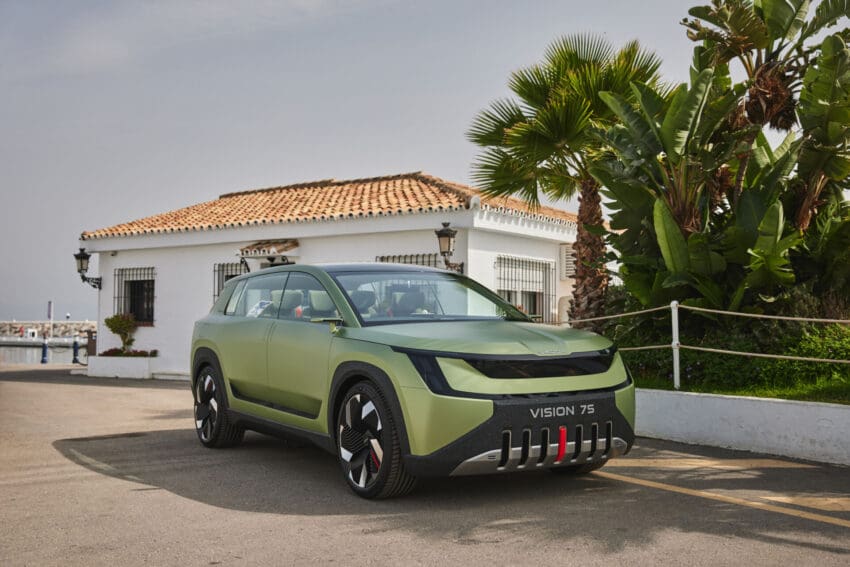
The Peaq is based on Skoda’s Vision 7S concept car which debuted in 2022 and demonstrated the brand’s “Modern Solid” design language for the first time. Since then the Czech brand has launched the Elroq and updated Enyaq using the same design language, and revealed the Epiq and a number of design studies informed by it.
Martin Jahn, Skoda’s sales and marketing boss, said: “With the Vision 7S, we entered new territory for Skoda, with a clear idea of how to elevate the brand. Since then, we have introduced a new design language and further refined our product identity. Now we are bringing this innovative vehicle concept to life.
“Our new flagship model takes our brand values of spaciousness and practicality to a whole new level. As of today, our bold vision for Skoda’s electric future has a name: Peaq – a clear statement of where this model belongs in our portfolio.”

The Peaq will act as Skoda’s flagship model and is expected to be its largest and most expensive car to date. It is expected to compete with models such as the £48,500 Peugeot E-5008, £50,000 Mercedes GLB and more expensive cars such as the Kia EV9 and Hyundai Ioniq 9.
In 2025, Skoda shared the first teaser images of the Peaq, showing clear connections to the Vision 7S. An upright slatted grille echoes the “Tech Deck” face of the Elroq and Epiq, with headlights pushed out to the edges of the car. At the rear, slimline LED lights sit in a traditionally upright tailgate.
Skoda says the Peaq will continue to deliver on the qualities for which it is famous – space, value and clever practical features.
There are no technical details so far, but the Skoda Peaq is expected to use the same MEB platform that underpins the Elroq, Enyaq and other models such as the VW ID Buzz. This would allow for two- and four-wheel-drive variants with up to 335bhp, and batteries up to 85kWh.