Peugeot Polygon Concept literally reinvents the wheel with upcoming e-208
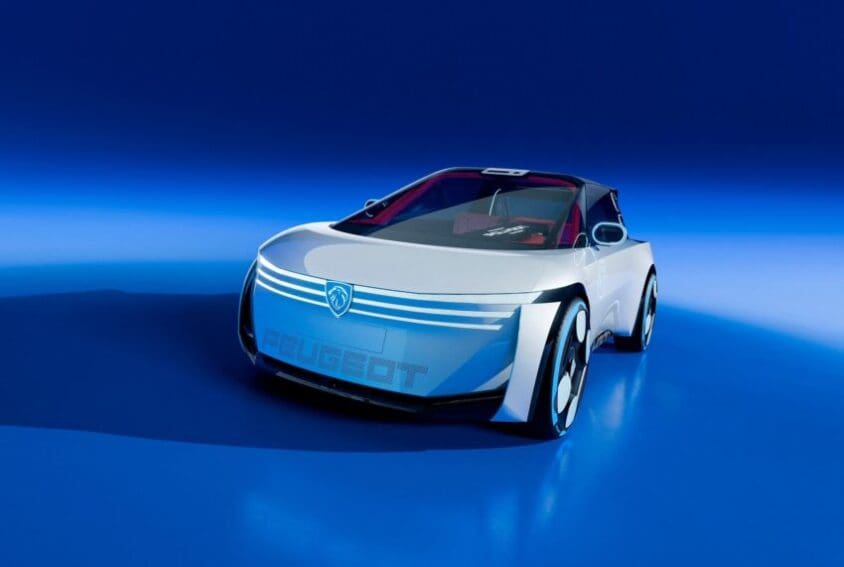
Peugeot has unveiled its futuristic-looking Polygon Concept at an online event, which hints heavily at the next generation of its all-electric e-208 supermini.
Measuring at just less than four metres long, the futuristic looking Peugeot Polygon Concept takes its name from its ‘Hypersquare’ steering wheel or “steering control” – the next iteration of the French carmaker’s divisive i-Cockpit.
The Polygon Concept is the first Peugeot to adopt a steer-by-wire system, meaning it does away with a mechanical connection between the steering wheel and the tyres. By using electronically-controlled sensors, Peugeot promises that this software-defined approach will translate into “driving pleasure exemplified in a compact car.”

By doing away with a physical link between the driver and the road, cabin space is freed up to let in an abundance of natural light. With the Hypersquare set high up on the dashboard, this allows the Stellantis-owned manufacturer to do away with an array of touchscreens. Instead, car information is projected from inside the dashboard onto the windscreen, essentially creating a 31-inch touchscreen.
The steer-by-wire system reaches full lock when the Hypersquare – with its four circular holes in each corner – is turned 170 degrees in one direction. This means lock-to-lock can be achieved in one full rotation of the wheel. In the current e-208, this takes three full turns.
The steer-by-wire system is said to provide a sense of “hyper agility” at higher speeds, and a better sense of accuracy throughout the driving experience. As early as 2027, Peugeot promises a software defined production model featuring steer-by-wire tech. This has led to speculation that the second-gen e-208 could arrive by then.

The Peugeot Polygon Concept adopts “a more feline stance than ever,” ushering in a less fussy, more geometrically-driven approach to its future designs. Like the new, all-electric Renault Twingo, the wheels have been pushed out to the very corners of the car to maximise space. Unfortunately, the ‘XXL’ gullwing doors are unlikely to make it onto the production model.
Peugeot has retained its signature three-claw light design, but reimagined it using Micro-LED tech running the width of the car’s front and rear. Another Micro-LED screen is position on the C-pillar adjacent to the pop-up cable port, allowing for drivers to keep an eye on the battery charge level from the outside.
Despite not making a direct reference to its past, the Polygon Concept’s angular design appears to draw on what many consider to be Peugeot’s finest hour – the 205 GTi. With the lozenge shape badging on the C-pillar – and the C-pillar itself – There’s more than a nod to one of Peugeot’s greatest hits.

When it comes to market, the new Peugeot e-208 will sit on parents company Stellantis’ STLA Small architecture, which is EV exclusive. Battery options can range from 37kwh to 82kWh, promising better range than the current e-208’s 268 miles. The platform will be shared with the electric-only next-gen Vauxhall Corsa.
Peugeot has sought to make the Polygon Concept as sustainable as possible by using materials sourced from the recycled seats of old Peugeots. Meanwhile, the exterior of the seats is made from recycled plastic.
Reflected in the introduction of the steer-by-wire system, Peugeot seeks to use as fewer parts as possible in the car’s construction, as this results in the Polygon Concept being lighter, more efficient, and easier to repurpose at the end of its life.