In with the old: New VW ID Polo resurrects physical buttons for EVs
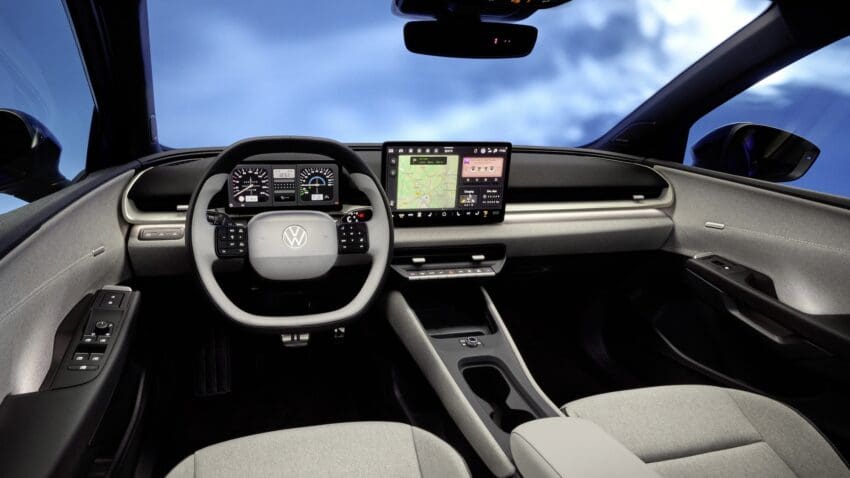
Volkswagen has showcased the interior of its upcoming ID Polo featuring physical buttons and switches in favour of the controversial haptic controls fitted to its current range of ID models.
Set to arrive later this year, the design of the ID Polo’s interior was overseen by Andreas Mindt, who promised to bring back physical switchgear on the back of largely negative customer feedback regarding ergonomics.

When the VW ID range arrived in 2020, its cabins were panned by users who were dissatisfied with poorly functioning haptic controls, glitchy tech, and an overall lack of VW’s traditional quality. Despite changes made to later ID models, the user experience remained mixed, forcing VW to rethink its interiors for its next generation of EVs, beginning with the upcoming ID Polo.
Wolfsburg has ditched the temperamental haptic ‘slider’ for the HVAC and hazard warning lights, and beneath the centrally mounted 13-inch infotainment display sits a row of physical buttons for these functions. A rotary dial now controls the infotainment volume and allows users to switch between tracks and radio stations.

The new squared-off, two-spoke steering wheel also comes with physical switchgear rather than haptic sensors: those on the left are responsible for driver assistance features, while those on the right manage the infotainment and the car’s screen displays.
Both the main infotainment display and the 10.25-inch driver readout can be configured in retro mode, whose analogue-style dials, odometer, charge level, and spooling tape deck graphics are all inspired by the Mk1 Volkswagen Golf.

Beyond creating “an interior that feels like a friend from the very first contact”, VW has sought to iron out the previous ID cars’ infotainment glitches by both cleaning up its own software and also integrating the highly praised Google built-in system favoured by the likes of Renault, Nissan, and Polestar.
Throughout the Renault 5 rival’s interior, Germany’s largest carmaker has adopted a new “Pure Positive” design language intended to invoke the “cross-class” fit and finish that was synonymous with its cars for decades. The textiles on the dashboard and door inserts are made from a type of thermoplastic obtained from recycled plastic bottles.

When it goes on sale, the VW ID Polo will be priced from around £22,000 and offered with either a 38kWh battery or a larger 56kWh unit, with the latter promising a 280-mile range and rapid charging speeds of up to 125kW.