
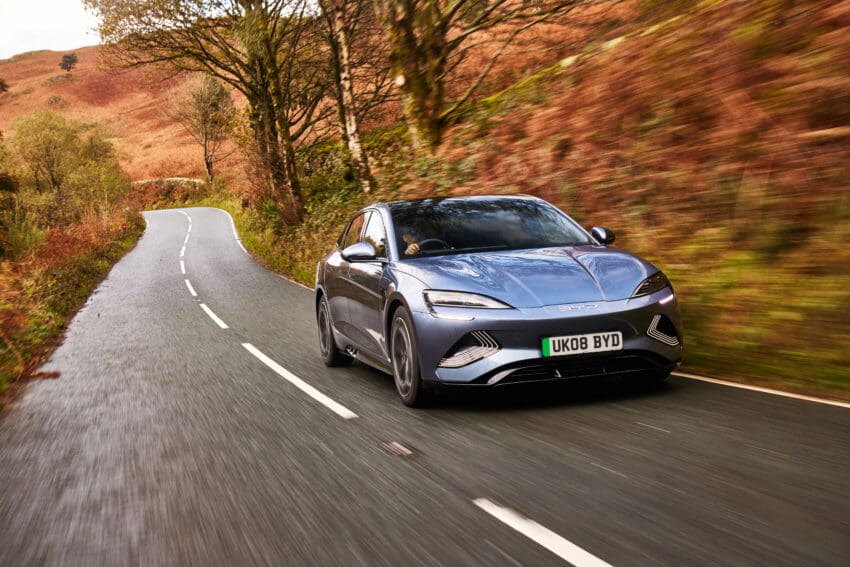
EVIDA: What You Might Not Know About EVs in the Philippines
Electric vehicles (EVs) are often framed as an environmental solution, but in the Philippines, their growth is driven just as much by economic planning.
While EVs remain relatively uncommon on local roads, government policy makes it clear that electric mobility is intended to be a long-term fixture rather than a passing experiment.
This direction is anchored by the Electric Vehicle Industry Development Act (EVIDA), a law that treats EVs as a strategic industry.
Instead of focusing solely on emissions reduction, EVIDA positions electric mobility as a tool for investment generation, industrial development, and reduced reliance on imported fuel. It connects transportation, energy, and manufacturing policy under a single framework.
To understand why the Philippines is pushing EVs and how ready the country is for that shift, it helps to look at EVIDA not just as a transport law but as a broader modernization effort.
From Policy to Economic Strategy: Why They’re Pushing Hard
EVIDA as a National Framework
EVIDA, or Republic Act No. 11697, was enacted in 2022 to establish a comprehensive policy for developing the electric vehicle industry. It covers the entire EV ecosystem, including manufacturing, importation, charging infrastructure, usage, and disposal.
Unlike earlier transport policies, EVIDA assigns coordinated responsibilities to agencies such as the DOE, DTI, and DOTr, ensuring that EV adoption is planned across sectors.
This approach reflects a shift in perspective: EVs are not treated as niche alternatives but as an industry the country intends to build.
The law also introduces fiscal and non-fiscal incentives to lower barriers for both businesses and consumers, signaling sustained government commitment rather than short-term encouragement.
CREVI: Turning Policy Into Action
To operationalize EVIDA, the government developed the Comprehensive Roadmap for the Electric Vehicle Industry (CREVI).
CREVI translates legislative goals into timelines and action plans, covering charging infrastructure, local manufacturing, workforce development, and grid integration.
Rather than focusing only on private vehicles, CREVI accounts for public transport, commercial fleets, and logistics. This broader scope allows EV adoption to scale gradually while addressing infrastructure and energy constraints.
The Practical Benefits Driving EV Adoption
Everyday Incentives for EV Users
EVIDA introduces practical incentives aimed at easing daily use. Qualified EVs are exempt from number coding schemes (yeah, that’s controversially big), offering greater mobility flexibility in urban areas.
Additional benefits, such as priority registration and preferential parking in some localities, further position EVs as convenient city vehicles.
Tax and Cost Advantages
Electric vehicles are exempt from excise taxes, and certain EV imports and components benefit from reduced or zero import duties. These incentives are designed to narrow the cost gap between EVs and conventional vehicles.
Over time, lower operating costs, particularly savings on fuel and maintenance, strengthen the economic case for EV ownership, even as upfront prices remain a consideration.
CIDP and Industry Support
EVIDA is supported by the Comprehensive Industry Development Program (CIDP), which focuses on building local EV-related industries. The program promotes domestic assembly, parts manufacturing, and technology transfer to support job creation and long-term affordability.
By strengthening the supply side, the CIDP aims to reduce dependence on fully imported EVs and stabilize prices as adoption grows.
Is EV Modernization Moving Too Quickly for the Public?
Much like how traditional Filipino card games such as Tongits transitioned into the online space, adapting to changing habits while retaining their core appeal, transportation is undergoing a similar shift.
The move toward EVs reflects a broader effort to redesign everyday systems around sustainability and convenience, rather than to discard what already works.
That said, readiness remains uneven. Charging infrastructure is still concentrated in major cities, limiting accessibility in provincial areas. Electricity costs, grid reliability, and public familiarity with EV technology continue to influence adoption.
Affordability is another challenge. Despite tax incentives, EV prices remain high relative to average consumer income. These gaps highlight the need to align policy ambition with infrastructure development and public education.
FAQs
Q: What are electric vehicles (EVs)?
A: EVs are vehicles powered partly or entirely by electricity. These include battery electric vehicles (BEVs), plug-in hybrids (PHEVs), and hybrid electric vehicles (HEVs).
Q: What is EVIDA?
A: EVIDA is the Electric Vehicle Industry Development Act (RA 11697), which establishes the national framework for EV adoption, incentives, and industry development in the Philippines.
Q: What is CREVI?
A: CREVI is the Comprehensive Roadmap for the Electric Vehicle Industry, outlining how EVIDA’s goals are implemented across infrastructure, manufacturing, and workforce development.
Q: What is the CIDP?
A: The Comprehensive Industry Development Program supports local EV manufacturing and supply chains through incentives, skills development, and technology transfer.
Q: What are some examples of EVs in the Philippines?
A: Examples include electric cars from brands such as Nissan and BYD, electric motorcycles and tricycles, and electric public utility vehicles deployed in select routes.