Smart Transportation Systems: Key Benefits and Real-World Examples
A decade ago, “digital traffic management” sounded futuristic; in 2025, it is now a competitive necessity. Congestion continues to drain roughly 2-4% of urban GDP, while transport emissions make up more than a quarter of global CO2 output.
Traditional road-widening projects cannot keep pace with growing travel demand, and voters are demanding cleaner, healthier streets.
Smart transportation systems, sometimes shortened to “STS” or grouped under the broader umbrella of intelligent transportation systems (ITS), offer a data-driven way out of the gridlock. By fusing real-time sensing, cloud analytics, and agile operations, cities can reconfigure capacity in minutes rather than in decades of construction. For transportation planners, smart city developers, and mobility suppliers, the question is no longer “Should we deploy smart transportation?” but “Which use cases deliver the fastest, most measurable benefits, and how do we scale them responsibly?”
Five Tangible Benefits of a Smart Transportation System
Smart transportation systems shine because they translate raw data into decisions that make daily mobility smoother, safer, and more sustainable. While every city measures success a bit differently, practitioners tend to report the same core advantages, insights that are also explored at https://dxc.com/industries/travel-transportation. Below, each benefit is unpacked in practical terms so planners and technology teams can see where the value comes from and what it takes to unlock it.
Smoother Traffic Flow and More Predictable Travel
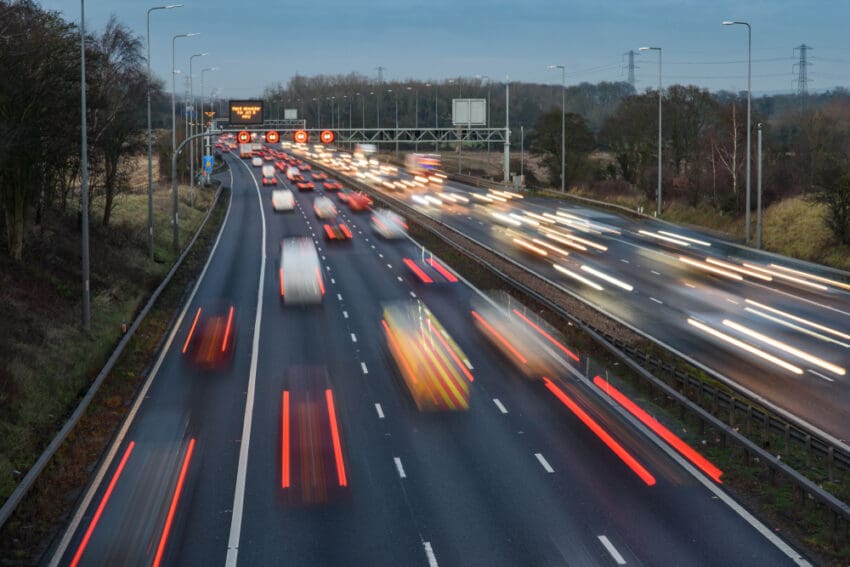
Traditional signal timing, incident response, and lane management rely on schedule-based rules. A smart transportation system, by contrast, updates those rules continuously. Sensors feed cloud analytics; analytics update signal plans or variable-message signs; drivers and transit operators enjoy steadier speeds. Because control logic adapts every few seconds, even minor fluctuations, like a burst of rideshare drop-offs outside a stadium, are absorbed before they mushroom into corridor-wide jams. The real prize is reliability: commuters can plan trips with tighter time cushions, freight operators can tighten delivery windows, and agencies gain a reputational boost for “making the city feel smaller.”
Lower Lifecycle Costs for Agencies and Taxpayers
Infrastructure that can “talk back” about its own condition saves money at every phase – design, construction, operations, and maintenance. Pavement sensors flag sections where rutting begins long before failure is visible, letting crews patch small defects instead of rebuilding entire roadbeds. Signal controllers that accept remote firmware updates eliminate countless truck rolls. Even capital planning benefits: by sifting through origin–destination data, engineers can validate whether an expensive grade separation is truly necessary or whether a cheaper queue-jump lane would achieve the same goal. In short, smart transportation systems redirect scarce funds from guesswork to precision interventions.
Safer Streets for All Travel Modes
Safety gains are not just about detecting crashes faster; they are about preventing conflicts in the first place. Computer-vision modules at intersections can recognize when a left-turning driver and a cyclist are on a collision course and extend an all-red phase to give the cyclist a head start. Curbside LiDAR can alert bus operators if a pedestrian steps into the roadway from between parked cars. These cues are machine generated so that they are faster than the human spotters could react, purchasing vital seconds. The net effect is that as the number of near misses decreases, the overall perception of people that high-tech technology is indeed caring of the vulnerable users grows.
Cleaner Air and Progress Toward Climate Goals
Small optimizations used in the city level tend to bring about emissions reductions realized by a smart transportation system. Coordinated signals curb stop-and-go driving; dynamic speed limits keep traffic in the most fuel-efficient range; integrated multimodal apps nudge passengers toward transit or active modes when conditions are favorable. Even though each small action may not seem important, when done every day by thousands of vehicles, these tiny fuel savings add up to significant reductions in pollution and carbon emissions. Clearer skies and quieter streets, in turn, boost the political capital required for longer-term measures such as low-emission zones or widespread electrification.
A Foundation for Future-Proof Mobility
Perhaps the most overlooked benefit is strategic: smart transportation systems create an extensible digital layer that can absorb tomorrow’s technologies with far less disruption. Once a city has a robust data exchange standard, weaving in vehicle-to-infrastructure messages or curb-pricing algorithms is largely a software exercise. The same fiber conduit that carries signal data today can stream high-definition maps to autonomous shuttles tomorrow. By treating sensors, networks, and analytics platforms as modular building blocks, agencies avoid the trap of “rip and replace” each time a new innovation emerges. The result is a mobility ecosystem that evolves as gracefully as a well-designed app updated in hours, not decades.
Intelligent Transportation Systems Examples in Action
Below are three well-documented intelligent transportation systems examples that have produced verifiable, publicly reported results. Each project tackles a different challenge – signal optimization, demand management, and incident response – illustrating the range of benefits a smart transportation system can deliver.
Los Angeles – ATSAC Signal Optimisation
Los Angeles’ Automated Traffic Surveillance and Control (ATSAC) network now manages more than 4,300 signalized intersections. Field evaluations published by the Los Angeles Department of Transportation and validated by the Texas A&M Transportation Institute show that corridor-wide signal retiming under ATSAC cuts average travel time by roughly 12 percent while boosting travel speed by 16 percent. Because the system relies on existing inductive loops and closed-circuit cameras, most upgrades were deployed without disruptive roadworks, an important lesson for cities with limited capital budgets.
Stockholm – Congestion Charging and Dynamic Pricing
Stockholm introduced cordon-based congestion charging in 2006 and has refined its pricing algorithm ever since. Long-term monitoring by national transport agencies confirms that weekday vehicle entries to the inner city remain about 20 percent below pre-charge levels. Associated air-quality data indicate inner-city NOx and PM emissions have stayed 10-14 percent lower than baseline, and county-wide CO₂ emissions are 2-3 percent lower. The scheme demonstrates how smart transportation systems that blend automated tolling, license-plate recognition, and real-time analytics can curb traffic and fund transit improvements simultaneously.
Singapore – EMAS Smart Motorway Incident Management
Singapore’s Expressway Monitoring and Advisory System (EMAS) integrates CCTV, radar detectors, and AI-driven video analytics to spot breakdowns or crashes within seconds. According to the Ministry of Transport, the average incident clearance time on the expressways was approximately 15 minutes from the time when the incident was detected to the time it was completely removed.
Implementation Roadmap: From Pilot to City-Wide Scale
The transition between an appealing idea and the crucial urban service should focus on technology, governance, and the trust of people equally. The five steps have proven to be a useful sequence that can be used to overcome the usual traps by the agencies:
- Determine a particular, measurable problem, e.g., the need to reduce peak-hour bus travel time on Corridor A by 15 percent, to help in selecting technology.
- Review the current data resources before they purchase new sensors; most of the cities already have 70-80 percent of the data they require.
- The high-visibility pilot location should be chosen in such a manner that it makes real users experience the difference within a single budget cycle to create political momentum.
- Commission an independent evaluator to verify outcomes and prevent optimism bias.
- Create an operations plan and permanent funding stream early, ensuring that the smart transportation system is maintained after the pilot team disbands.
Following these steps keeps technical and financial risks low while accelerating time-to-value for smart transportation systems.
Conclusion
Smart transportation systems have matured from experimental gadgets to mission-critical infrastructure. Whether your priority is congestion relief, decarbonization, safety, or economic vitality, the technology palette now exists to deliver quantifiable returns within a single budget cycle. Los Angeles, Stockholm, and Singapore highlight different paths, yet all three projects share a common DNA: clear goals, data-centric operations, and scalable design. As 2026 budgets take shape, mobility professionals who embrace these principles will outpace those clinging to 20th-century playbooks. The era of intelligent transportation is not coming – it is already navigating our streets.