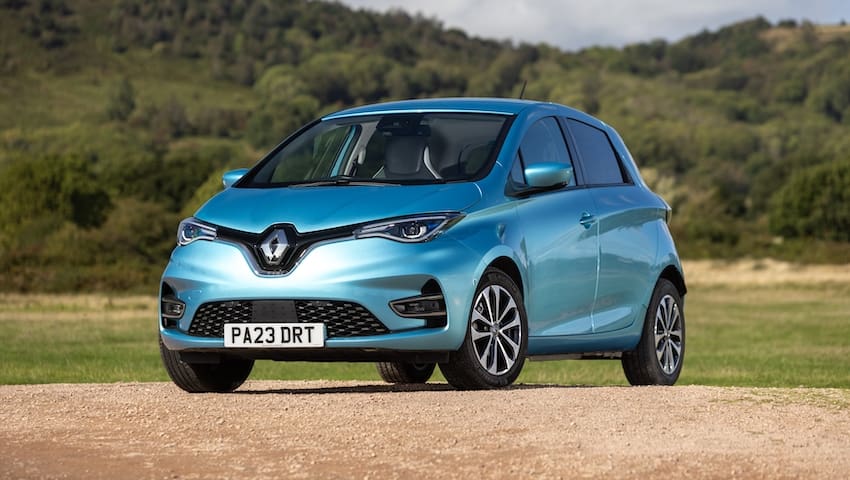
Given Renault’s EV track record, a used Renault Zoe isn’t a bad gateway into all-electric motoring, but there are one or two concerning caveats…
The Renault Zoe was introduced in 2013 as a rival to the likes of the Nissan Leaf and the BMW i3.
By the time it was replaced by the all-conquering Renault 5 in 2024, the Zoe – meaning ‘life’ in Greek – had scooped numerous awards from the motoring press, including ‘Best Supermini’, ‘Car of the Year’, and ‘Best Small Electric Car’.
Undoubtedly, the Zoe showed that electric cars could be used as daily drivers. It could accommodate four, came with plenty of ‘big car’ tech, and 2020 facelift models were capable of up to 245 miles on a single charge.
However, a used Renault Zoe does come with a few issues to consider. The facelifted cars infamously scored a shocking zero stars in the Euro NCAP safety tests, and Renault’s battery lease system on older used cars can prove costly if you don’t do your homework properly.
While eclipsed by its successor, a used Renault Zoe has the potential to be an affordable gateway into EV ownership.
Used Renault Zoe equipment
Upon launch, the Renault Zoe was available in three trim levels: Expression Nav, Dynamique Nav, and Signature Nav.
Each Renault Zoe model was generously equipped, with base model Expression Nav cars fitted with climate control, cruise control, and a seven-inch infotainment system with integrated navigation. For the purists out there, it’s worth noting that the Expression is the only Renault Zoe to ride on 15-inch steel wheels.
Step up to the Dynamique Nav, and automatic headlights and wipers, keyless entry and go, a DAB radio, rear parking sensors and 16-inch alloy wheels built on the entry-level model’s kit list.
Renault took things further by fitting the range-topping Signature Nav models with some standard ‘big car’ tech. This included a Bose sound system, electronically-folding door mirrors, front and rear-view parking cameras, heated front seats, and some Cupra-style bronze trim around the cabin.

When the Zoe underwent its major facelift for the 2020 model year, Expression, Dynamique, and Nav were renamed Play, Iconic, and GT Line.
The latter two models benefited from a larger 9.3-inch infotainment screen. From launch, Apple CarPlay and Android Auto compatibility were standard, but facelifted cars included wireless connectivity.
Throughout its life, the Renault Zoe was available with three battery choices. Early cars came with a 22kWh unit mated to an 82bhp electric motor. Combined, this setup returned an official range of 130 miles.
Later, Renault introduced a 41kWh battery and uprated motor offering 92bhp. In standard guise, these ‘R90’ cars had a real-world range of 155 miles. A Quick Charge ‘Q90’ Zoe with the same 41kWh battery had a charging speed of 43kW and a 196-mile WLTP range.
Note, however, that this latter figure has been converted from the now-outdated NEDC cycle, which was replaced by WLTP at the end of 2018.

The final Renault Zoe to be powered by the 41kWh battery was the R110. The most powerful Zoe yet, the R110 had 107bhp, but these additional electric horses came at the expense of range, which dropped to 186 miles.
When the Zoe underwent a major overhaul in 2020, Renault seriously improved the Zoe’s range, albeit controversially.
When introduced, the new car had just one choice of battery, a 52kWh unit, and the R110 was joined by the R135 model with 134bhp. Depending on the trim, the Renault Zoe now had a range of between 238 and 245 miles.
However, the extra miles were in part achieved after Renault removed the Zoe’s side airbags and a raft of active safety measures to reduce weight. This decision (and Euro NCAP’s shifting standards) saw the Zoe’s previous five-star Euro NCAP rating plummet to zero, making it one of three cars in modern automotive history to take this dubious honour.
Renault Zoe price range and running costs
Like the Nissan Leaf and BMW i3, early versions of the Renault Zoe can come across as a bargain.
There could, however, be a catch. Cars built before the 2020 facelift could be bought outright, but Renault also offered a battery lease scheme, which cut the initial purchase price but left owners paying a monthly fee for the car’s battery.
This was a popular choice with customers of the pre-facelift model, who paid anywhere between £25 and £110 per month depending on their mileage.
The problem is that the lease deal transfers with ownership of the car, and even now, some cars are tied to a lease scheme.

That means an apparent bargain could come with an extra monthly cost attached. The only way out of it is to buy the battery from Renault’s finance company, and this isn’t cheap. So read all the paperwork carefully.
On AutoTrader, we found 342 Zoes for sale via retailers, the cheapest of which was a 2014 Dynamique model with 68,984 miles on the clock and the 22kWh battery, priced at £2,495. Note, however, that this was from a non-official Renault dealership and there’s no information on whether it is still tied to a battery lease.
History has taught us that it’s always better to buy from an approved retailer. With that in mind, the cheapest dealer-approved used Renault Zoe we found was a 2019 41kWh car. Another Dynamique model, it had covered 22,065 miles and was priced at £4,990. However, the dealer noted that it is a battery lease vehicle, so there’s extra cost attached.

At the other end of the spectrum, the most expensive approved-used Renault Zoe we found was a 2023 Techno car with a 52kWh battery and a total mileage of 6,738 miles. Yet with a price tag of £13,466, it’s edging close to second-hand Renault 5 territory.
Given the Renault Zoe’s diminutive battery sizes, charging at home with an 8p/kWh tariff will cost from £1.76 for a full charge of 22kWh model to £4.16 for the last 52kWh versions.
On April 1 2025, EVs became taxable under new government legislation, meaning they are no longer exempt from road tax. As such, all-electric cars registered from April 1, 2017 onwards will now be taxed £195 annually. That does mean that early Zoes fall under the old taxation system, where they cost as little as £20 per year.
Renault Zoe insurance
The used Renault Zoe is one of the more affordable EVs in terms of insurance. The most wallet-friendly Zoe to insure is a pre-facelift Expression model, which falls into insurance group 14. Meanwhile, the most expensive version to insure is the Iconic R110 with the 52kWh battery, falling under insurance group 25 – slap bang in the centre of the UK’s 50 car insurance brackets.

As always, your insurance quote will depend on everything from your age and occupation to where you live, where you work, and your driving record. We strongly advise that you look across a number of car insurance comparison sites before making any purchases.
Renault Zoe reliability and faults to look for
While Renault has transformed itself into one of the world’s leading EV makers over the last few years, the Zoe comes from a time when French cars were synonymous with fizzy electrics.
According to the 2024 What Car? reliability survey, Zoe owners’ main gripes were related to the 12-volt battery, air conditioning, charging systems, and non-motor electrics. Problems related to the bodywork, interior quality, and brakes were also noted, along with mixed reviews for dealers.
What’s more, the Renault Zoe ranked 11th from 18 cars in the same survey, with an 86% reliability score. While this places the Zoe beneath the Mini Electric and the Nissan Leaf, it still sits above the award-winning Kia EV6 and MG4.

In the manufacturer’s table, Renault ranked 20th out of 30 with a reliability score of 91%. While on paper this doesn’t look great, this still puts it ahead of Mercedes-Benz, Audi, Volkswagen, Ford, and JLR.
When it comes to faults, four major issues related to the Renault Zoe were identified: Front wheel arch liners would rub against the front brake hoses and cause them to leak. An incorrect accelerator pedal was fitted to a batch of 2017 cars.
Meanwhile, a line of vehicles produced from July 2015 to April 2017 was plagued by broken parking brake lever pins, causing them to roll away when parked. Finally, the rear seat bench on some 2020 cars was not properly locked into position, potentially causing severe injury or death in the event of an impact.
If you decide to purchase a used Renault Zoe, then check with your nearest Renault dealership to see if these faults have been repaired.
Official recalls
Throughout its 11-year life, the Renault Zoe was recalled a total of six times. First-gen cars from 2016 – 2018 were affected a total of four times, while heavily facelifted 2020 models 2020 models were recalled twice.
Renault Zoe: The ‘one to have’
Believe it or not, 2020 was six years ago. With this slightly worrying piece of information in mind, we suggest looking at one of the majorly facelifted used Renault Zoes introduced for that model year.
Not only are these the most recent Zoes, but their 52kWh batteries also offer the best range in the car’s history and avoid any confusion around leasing.
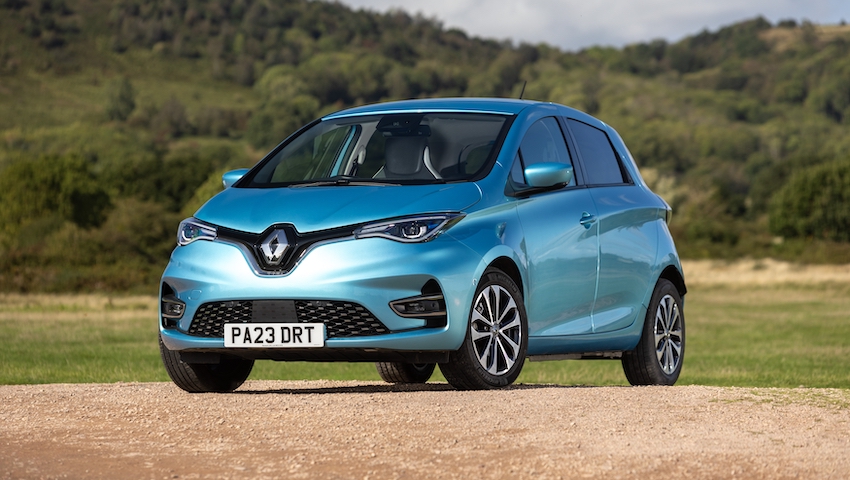
While the flagship GT Line’s electronically folding door mirrors, front and rear-view cameras, heated front seats, and Bose sound system may sound tempting, remember that the bulk of the Zoe’s reliability issues stem from its electrics.
All things considered, our ‘one to have’ from the used Renault Zoe range would be a Techno trim car. It’s still generously equipped, but the absence of other electronically powered toys slightly reduces the risk of electrical gremlins.