What Are the Levels of Automation in Self-Driving Cars?
There’s something magical about the idea of a car that drives itself. It’s the kind of childhood fantasy you daydream about while staring out the window during long road trips, imagining a world where your car simply knows what to do.
But as adults, we now live in a world where that fantasy is slowly edging into reality just not in the simple, flick-a-switch way we once imagined.
The truth is that “self-driving” isn’t a single feature. It’s a spectrum. A journey. A whole staircase of capabilities that cars climb, one level at a time. And each level changes the relationship between humans and driving in a pretty profound way.
Understanding these levels isn’t just for techies or futurists. It matters for everyday people too — for drivers, parents, business owners, and anyone who wants to know what role we’ll actually play in this new era of transportation.
So let’s take a human look at what these levels really mean.
Level 0: The World We’ve Always Known
At Level 0, you’re in charge. Completely. There’s no negotiation. No shared responsibility. If the car does anything automated at all maybe it dings at you when you get too close to another car it’s not actually “driving”. It’s observing, nudging, hinting. But everything still relies on your senses, your judgement, and your reactions.
This is the kind of driving most of us learned. Hands at ten and two, constant awareness, and the faint hum of stress that comes with knowing that every decision is yours alone.
Level 1: A Helpful Hand on the Wheel
Level 1 is when your car begins to feel like a polite co-pilot — the type who won’t dominate the conversation but quietly steps in when needed. Maybe it manages your speed on long stretches of motorway. Maybe it whispers corrections through the steering wheel to keep you centred.
But it only handles one thing at a time. You’re still the one doing the driving; you’re just getting a little help along the way.
Think of it as the moment you first notice your car isn’t just a machine — it’s starting to feel like a partner.
Level 2: The First Taste of “Semi-Self-Driving”
Level 2 is where things get interesting. Now the car can steer and manage acceleration and braking simultaneously. This is where the modern headlines about “self-driving” usually come in — even though you still need to be fully alert.
Cars at this level can glide down a motorway, gently adjusting to traffic, keeping a steady line, and making the experience smoother than it’s ever been. But they’re not independent. They still need you to supervise, correct, and be ready to take over without warning.
This level is a bit like training wheels for the future. The car is competent, but not quite ready to be left alone.
Level 3: When the Car Truly Takes Over — But Only Sometimes
Level 3 is the first dramatic shift in responsibility. This is when the car can genuinely drive itself — but only under certain conditions, like on well-marked motorways with predictable traffic.
When the system is active, you’re allowed to relax more. You can look away. You can let your mind drift. For the first time in automotive history, the car is the primary driver.
But there’s a catch: it may suddenly ask you to take back control.
That handover moment is one of the biggest challenges in the entire self-driving world. Humans aren’t designed to snap back into high-stakes decision-making instantly. It’s a delicate dance of trust, timing, and expectation — and it’s one of the reasons Level 3 feels both exciting and unnerving.
Level 4: The Edge of the Future — The Car as a Chauffeur
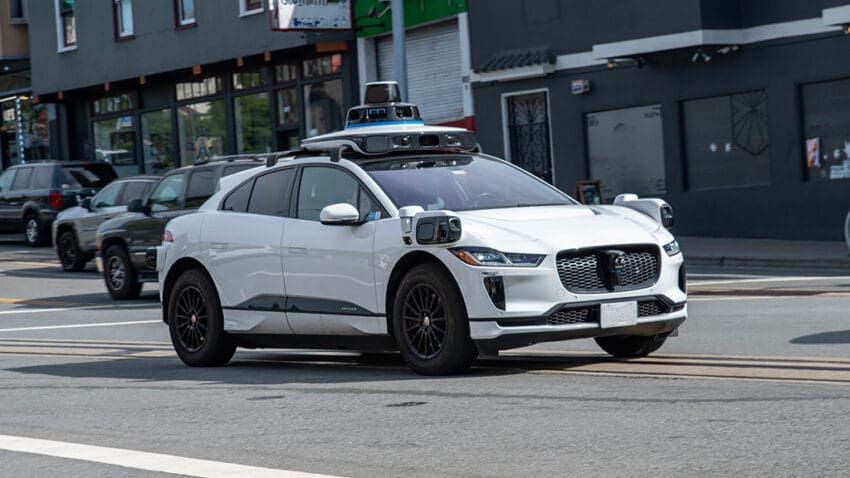
Level 4 is what most people imagine when they hear the phrase “driverless car.” At this level, the car doesn’t just assist you — it can fully operate without you in certain areas or conditions.
If the car is within its mapped zone, it makes all the decisions. It behaves like a digital chauffeur: confident, consistent, utterly focused on the road. You’re free to be a passenger in your own vehicle.
But outside those zones — or in bad weather — the car may hand control back. It’s highly intelligent, but still context-dependent.
This is also where the conversation shifts from human error to system reliability. The question becomes less about whether you reacted fast enough and more about whether the sensors, software, or mapping performed as intended.
This is where insurance evolves dramatically too. If that’s something you’re exploring, you may want to look into autonomous vehicle insurance to understand how responsibility shifts as autonomy increases.
Level 5: The Final Destination — True, Universal Autonomy
Level 5 is the dream. A car that can drive anywhere, in any weather, with no human involvement at any point. A car without pedals. Without a steering wheel. Without the assumption that a human will ever need to step in.
This isn’t just an upgrade — it’s a redefinition of what a car even is.
At Level 5, transportation becomes something you experience, not something you control. The vehicle is the driver. The human is simply a traveller.
We’re not there yet. But every advancement from Level 0 to Level 4 is slowly stitching that future into place.
Why These Levels Matter More Than Ever
As cars become more capable, we start asking new questions. Not just technical ones, but human ones.
What does it mean to “drive” when the car does most of the work?
How do we stay alert when our job is to monitor rather than act?
At what point do drivers stop being drivers altogether?
And who takes responsibility when a machine makes a mistake?
Understanding the levels of automation gives us a framework to answer these evolving questions. It helps set expectations. It prevents misunderstandings. And it keeps us from either over-trusting or under-estimating the technology that’s rapidly reshaping our roads.
The 5 Levels of Self Driving Car Automation
Here’s the spectrum in its simplest form:
- Level 0: You drive everything.
- Level 1: The car helps with one task.
- Level 2: The car helps with two tasks but still needs your full attention.
- Level 3: The car can drive itself in certain scenarios but may ask you to intervene.
- Level 4: The car drives independently in defined areas, no human needed.
- Level 5: Full autonomy everywhere, no driver required whatsoever.
How does telematics insurance fit into the future of self-driving cars?
Telematics insurance has already transformed how traditional driving is priced — using real driving data like braking, speed, cornering and time of day to build a more accurate risk profile.
With self-driving cars, telematics insurance becomes even more relevant because autonomous vehicles rely on constant streams of electronic data. They generate detailed logs about every decision the car makes — lane positioning, sensor readings, system interventions, and more.
This kind of always-on digital footprint makes telematics insurance perfectly suited to automation. Instead of judging only the driver’s behaviour, insurers can analyse:
- how the automated system performs
- how often it requires human takeover
- how safely it handles unexpected situations
- whether software updates improve or worsen performance
In many ways, self-driving cars make telematics insurance not just useful, but almost unavoidable.
A Future Built on Trust and Transition
We’re not leaping into fully autonomous cars overnight. We’re walking toward them, step by step. Each level brings a blend of excitement and uncertainty, convenience and caution, automation and human judgment.
The journey to self-driving isn’t just a technological evolution — it’s a human one too. It requires us to adjust how we think, how we behave, and how we understand the role of driving in our daily lives.
But if there’s one thing that’s clear, it’s this:
We’re living through one of the biggest shifts in transportation history. And understanding these levels is the key to navigating it — confidently, safely, and with a clear view of the road ahead.